The SUNEAST Portable SSD Nano is a pocket sized external solid state drive that leans on a single idea, which is to make fast flash storage small enough to forget you are carrying it. This is an editorial overview written from the current Amazon listing and the published specifications rather than from first hand use, so every figure below should be read as a manufacturer claim that you confirm on the product page before you buy.
What it is
The SUNEAST Portable SSD Nano is a compact portable SSD that connects over USB-C. According to the listing it is offered in a 256GB capacity, uses a USB-C 3.2 interface, ships formatted as exFAT, and is described as ultra compact with a listed weight of 2.8 g. The listing also states broad device support, naming iOS, Windows, macOS, Linux, and Android. In plain terms this is meant to be a tiny drive you plug into a USB-C port to move or store files, closer in footprint to a flash drive than to the pocket hard drives many people picture when they hear the words external storage.
Because it is a solid state drive rather than a spinning mechanical disk, there are no moving platters inside, which is one reason the format can be shrunk so far. The practical promise is simple storage that travels well, and the rest of this overview looks at what the listing claims, where buyers should slow down, and how a drive like this compares with the alternatives.
Key features
The headline specifications, all as stated on the listing, are a 256GB capacity, a USB-C 3.2 interface, read speeds up to 450 MB/s, write speeds up to 400 MB/s, an exFAT file system, and a 2.8 g weight that is the basis for the Nano name. The listing presents the read and write figures as peak or up to numbers, which is the normal way these ratings are published, so the speeds you actually see can vary with the host device, the cable, the port, and the type of files you move.
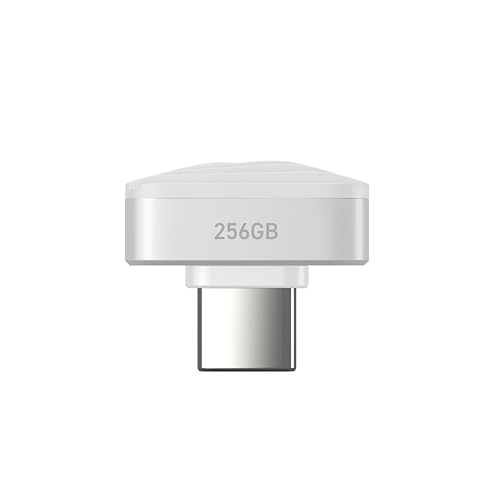
SUNEAST Portable SSD Nano, 256GB USB-C 3.2
Compact USB-C portable SSD listed at 256GB with read up to 450 MB/s and write up to 400 MB/s per the Amazon listing; confirm current details before buying.
Check price on AmazonWho it is for
A drive in this class is aimed at people who want portable file storage that disappears into a bag or a pocket. The obvious uses are carrying documents, photos, and video between machines, keeping a secondary copy of important files as part of a backup routine, and on the go transfer where you need to hand files from one computer to another without a network. The exFAT format that the listing mentions is a common choice for exactly this cross device shuffling, because it is readable and writable on both Windows and macOS without extra software, and the listing claim of iOS, Android, Linux, Windows, and macOS support points at the same mixed device life.
It is less obviously suited to being your only copy of anything irreplaceable. A tiny drive is easy to misplace, and any single storage device can fail, so treat it as one link in a backup chain rather than a vault.
Strengths on paper
On paper the appeal is straightforward. The size is the standout feature, since a 2.8 g body as listed is far lighter than a typical external hard drive and small enough to live on a keychain or in a coin pocket. The USB-C connector matches the port found on most recent laptops, tablets, and phones, which reduces the adapter hunting that older drives often required. The solid state design, with no spinning disk, generally tolerates being knocked around in a bag better than a mechanical drive, although that is a property of the category and not a promise about any specific unit. Finally, the listed read and write figures of up to 450 MB/s and up to 400 MB/s are comfortably quicker than old USB flash drives and mechanical portable disks tend to deliver, which is the main reason to choose an SSD style device for frequent transfers.
Things to check
Before buying, a few points are worth confirming directly on the listing.
- Usable versus labeled capacity. A drive sold as 256GB will show less than 256GB of usable space once it is formatted, because storage is labeled in decimal gigabytes while your operating system counts in binary, and the file system itself uses some room. This is normal for every brand, but plan around a figure somewhat lower than the number on the box.
- USB-C interface and cable. The listing describes a USB-C 3.2 interface. Check what cable or adapter is included, since a tiny drive may plug in directly or may expect a particular connector, and confirm your device has a compatible USB-C port if you want the rated speeds.
- Read and write speeds as listed. The up to 450 MB/s read and up to 400 MB/s write numbers come from the listing. Real world speeds depend on your hardware and the files involved, and small drives can slow down during long sustained writes, so look for recent buyer feedback on real world performance.
- Compatibility. The listing names iOS, Windows, macOS, Linux, and Android. If you intend to use it with a phone or tablet in particular, verify the exact connector and any app or format requirements for your device.
- Smaller brand, so verify warranty. SUNEAST is a smaller name than the largest storage brands, so it is sensible to confirm the warranty terms, the seller, and the support path on the listing before you commit, and to weigh recent reviews.
- Verify on the listing. Capacities, speeds, included accessories, and compatibility can change between variants, so always confirm the current details on the product page rather than relying on any summary.
How it compares
It helps to place this drive against the two things buyers usually compare it with. Against a traditional external hard drive, a portable SSD like this one trades raw capacity for speed, size, and shock tolerance; mechanical drives still tend to offer far more room for the money, so they remain attractive when you need bulk storage and can accept a larger, heavier, slower device. Against an ordinary USB flash drive, a portable SSD generally promises higher and more consistent transfer speeds and a more drive like experience, while a basic flash drive can be smaller and simpler but often slower, especially on writes. The SUNEAST Portable SSD Nano is positioned to blur that line by being almost as small as a flash drive while advertising SSD class speeds. Whether it holds that position in daily use is exactly the kind of thing to check against current buyer feedback, and this overview deliberately avoids naming specific rival models, since the right comparison depends on the capacities and options available to you at the moment you shop.
Verdict
On the strength of the listing, the SUNEAST Portable SSD Nano reads like a sensible pick for anyone who wants genuinely pocketable USB-C storage and values size and convenience over maximum capacity. The published specs, a 256GB capacity, a USB-C 3.2 interface, read speeds up to 450 MB/s, write speeds up to 400 MB/s, exFAT formatting, and a 2.8 g body, line up with that goal, and the broad device support widens where it can be useful. The open questions are the ones common to small drives from smaller brands, namely real world sustained speed, the usable capacity after formatting, and the warranty and support you can count on. If those check out for your needs, it is an easy drive to carry. The best next step is to check the current listing to confirm the capacity option, the speed claims, the included cable, and the warranty before you decide.
This is an editorial overview based on the current Amazon listing and published specifications, not a hands on review, and no first hand testing is implied. ProductPickly may earn a commission from qualifying purchases made through links on this page.