Laminators
Best Laminators for Home, Office and Photos
7 picks compared
9 min read
ProductPickly is reader-supported. When you buy through links on our site, we may earn an affiliate commission at no extra cost to you. It never changes our picks.
The short answerThe best laminator overall is the Scotch Thermal Laminator with its two-roller system, which gives smooth, bubble-free results on letter-size documents. For a budget the Amazon Basics 9-inch is the pick, for wide sheets the Scotch 13-inch, and for busy offices the fast GBC Fusion 7000L.
?How we pickedWe compare published specifications, safety certifications and thousands of verified owner reviews, and we do not physically test every unit. Read the full process in our review methodology.
Scotch Thermal Laminator (2-Roller)
★★★★★ 4.7 / 5 Best overall
A dependable two-roller laminator that produces smooth, bubble-free results on letter-size documents. Its reliability and clean finish make it the default choice for home and office use.
Width Letter (9 in)Rollers 2-roller systemPouches Up to 5 milBest for Everyday documents
- Smooth, bubble-free finish
- Reliable and simple
- Handles common pouch sizes
- Letter width only
- Warm-up wait
Best for: Home and office documents
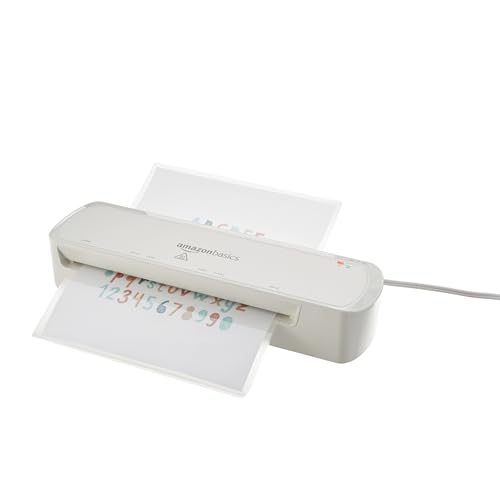
Amazon Basics 9-Inch Laminator
★★★★★ 4.6 / 5 Best budget
A no-frills 9-inch laminator with quick warm-up at a very low price. When you just need to laminate the occasional document, this covers it without spending much.
Width 9 inWarm-up QuickPouches Standard sizesBest for Occasional use
- Very affordable
- Fast warm-up
- Compact
Best for: Light, occasional laminating
Scotch Extra Wide 13-Inch Laminator
★★★★★ 4.6 / 5 Best wide format
A 13-inch input laminator that handles larger sheets and menus that a 9-inch machine cannot. The extra width opens up posters, signage, and oversized crafts.
Width 13 in inputRollers Multi-rollerPouches Wide formatsBest for Large sheets
- Fits wide documents
- Scotch reliability
- Great for signage
- Bigger footprint
- Costs more than 9-inch
Best for: Posters and menus
GBC Fusion 7000L 12-Inch Laminator
★★★★★ 4.6 / 5 Best for offices
A faster 12-inch office laminator built for higher volume and thicker pouches. For a busy workplace laminating regularly, the speed and capacity pay off.
Width 12 inSpeed FastPouches Thicker milBest for High volume
- Fast, high throughput
- Handles thick pouches
- Office-grade build
Best for: Busy office use
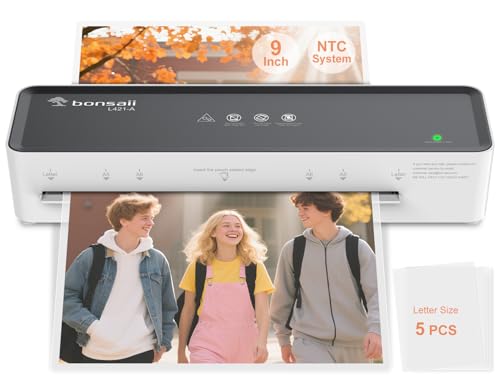
Bonsaii 9-Inch Laminator (50 Sheets)
★★★★★ 4.5 / 5 Best value bundle
A 9-inch laminator that ships with 50 pouches, so you can start laminating out of the box. The included sheets make it the best value for a first machine.
Width 9 inBundle 50 pouches includedWarm-up QuickBest for Starter kit
- Pouches included
- Good value
- Ready to use
- Letter width
- Entry-level build
Best for: A ready-to-go starter
Bonsaii Compact Photo Laminator
★★★★★ 4.4 / 5 Best for photos
A compact laminator tuned for photos and smaller items, easy to store on a shelf. A tidy pick for preserving pictures and craft pieces at home.
Width 9 inFocus Photos, small itemsSize CompactBest for Photos and crafts
- Compact and storable
- Good for photos
- Affordable
- Small format
- Home-use build
Best for: Preserving photos
13-Inch Laminator for 11x17 Sheets
★★★★★ 4.4 / 5 Best for 11x17
A 13-inch laminator sized for tabloid 11x17 sheets, bundled with pouches for larger projects. The pick when your documents run bigger than letter size.
Width 13 inFits 11x17 tabloidBundle 50 sheetsBest for Tabloid sheets
- Handles 11x17
- Pouches included
- Good for larger work
Best for: Tabloid-size laminating
A laminator protects documents, photos, and signs behind a sealed plastic layer that resists water and wear. The best one for you comes down to width, speed, and how often you laminate, from cheap home machines to fast office units. Below, picks for every need and budget.
Choosing the right width
Width is the first decision. A 9-inch laminator handles letter-size pages and covers most home, classroom, and small-office tasks. Step up to a 12 or 13-inch machine for menus, posters, signage, and 11x17 tabloid sheets. A wider laminator costs more and takes more desk space, so buy for the largest document you realistically laminate rather than the biggest machine available.
Pouch thickness and warm-up
Pouches come in mil thicknesses, commonly 3 to 10 mil, where thicker means a stiffer, more durable result for cards and signs and thinner suits everyday paper. Make sure your machine supports the mil you want. All thermal laminators need a short warm-up to melt the pouch adhesive, shown by a ready light; feeding a pouch too early causes cloudy seals. Office machines heat fast to keep pace with volume.
Getting clean, bubble-free results
Good technique matters as much as the machine. Feed the sealed edge in first and straight, use pouches matched to the supported thickness, and wait for full warm-up. Two-roller and multi-roller systems produce the smoothest, most bubble-free finish. If a pouch jams, use the machine\u2019s release lever to back it out rather than yanking it, which protects both the document and the rollers.
Matching the machine to your use
For occasional home laminating, a budget 9-inch machine, ideally bundled with pouches, is all you need. For a busy office, a faster 12-inch model handles higher volume and thicker pouches without slowing down. For posters and oversized work, a wide-format machine is essential. Decide how large, how often, and how thick you laminate, and the right machine follows naturally.
Questions people ask
What size laminator do I need?
Match the input width to your largest document. A 9-inch machine handles letter-size pages, which covers most home and school needs, while a 12 or 13-inch machine takes menus, posters, and 11x17 tabloid sheets. Buy the width you will actually use, since a wider laminator is larger and pricier but a too-narrow one limits you.
What do the mil numbers on pouches mean?
Mil measures pouch thickness per side, and common options are 3, 5, and up to 10 mil. Thicker pouches make a stiffer, more durable result, ideal for signs and cards, while thinner ones suit everyday documents and are cheaper. Check that your laminator supports the mil thickness you want before buying pouches.
Why do laminators need to warm up?
Thermal laminators heat rollers to melt the adhesive inside the pouch, so they need a short warm-up, often signalled by a ready light. Feeding a pouch before the machine is fully heated causes cloudy or incomplete sealing. Budget machines advertise quick warm-up, while office models heat fast to keep up with volume.
How do I avoid bubbles and jams?
Use pouches that match your machine's supported thickness, feed the sealed edge in first and straight, and let the machine fully warm up. A two-roller or multi-roller system, like the Scotch, gives smoother, bubble-free results. If a jam occurs, most laminators have a release lever to reverse the pouch safely rather than pulling it.
Can I laminate photos?
Yes, and a compact photo laminator is made for it. Thermal lamination protects photos from moisture and handling, though it is permanent, so do not laminate irreplaceable originals you may want to remove later. For precious photos, laminate a copy. Use an appropriate pouch size and let the machine cool the result flat.
What is the difference between hot and cold lamination?
Hot, or thermal, lamination uses heat to seal pouches and is what these machines do, giving a strong, clear finish for most materials. Cold lamination uses pressure-sensitive adhesive without heat and suits heat-sensitive items like some photos or receipts printed on thermal paper. For general use, a thermal laminator is the standard choice.
How thick a document can a laminator handle?
That depends on the machine and the pouch mil it supports. Home laminators handle standard paper and card in thinner pouches, while office models like the GBC Fusion take thicker pouches for sturdier results. Very rigid card may not feed well; check the machine's stated pouch thickness and material guidance before laminating heavy stock.
Are pouches included with laminators?
Some machines ship with a starter pack of pouches, like the Bonsaii bundle, which is handy for beginning right away. Others are sold as the machine only. If a set includes pouches, factor that into the value, and remember that pouches are a consumable you will keep buying as you use the laminator.
The bottom lineSo which one?
Buy the Scotch Thermal Laminator for reliable everyday results. Choose the Amazon Basics 9-inch to save money, the Scotch 13-inch for posters and menus, or the GBC Fusion 7000L for high-volume office work.