Over-ear headphones are the comfortable, full size option for people who want bigger sound, better passive isolation, and longer wear than earbuds can offer. The ear cups sit around the ear rather than on it, which spreads clamp pressure and usually leaves room for larger drivers. This roundup collects six over-ear models worth shortlisting, from affordable wireless pairs with very long rated battery life to a wired studio style can and a premium noise cancelling option.
Our picks are editorial selections drawn from current Amazon listings in the electronics and office category. We did not build them from a single feature. Instead we looked at how each pair is positioned, what the listing claims for battery, connection, and noise control, and which kind of listener each one suits. Battery hours, driver size, noise cancelling, and codec support are listing claims from the manufacturer, so treat them as specifications to compare rather than guarantees.
How we chose
We started with over-ear models only, then grouped them by job: an everyday all rounder, a premium wireless option, a wired pair for studio and DJ use, a budget friendly wireless pick, a long battery choice, and a balanced value pick. For each one we read the product listing for the headline specifications, the stated connection type, and the comfort and travel features, then wrote an honest summary of who it fits. Nothing here is a guaranteed result. A headphone that suits a commuter is not automatically the right pick for mixing a track, so the badges describe intended use rather than a single overall winner.
The picks in detail
Bose QuietComfort, our top pick
Our top pick is the Bose QuietComfort, a wireless Bluetooth over-ear built around active noise cancelling and all day comfort. The listing highlights an active noise cancelling system with a microphone for calls, USB-C charging, deep bass tuning, and up to 24 hours of playtime. For most people who want one pair for the commute, the office, and travel, this is the easiest recommendation because it balances quiet, comfort, and simple Bluetooth use.
Beats Studio Pro, best premium
The Beats Studio Pro is our premium wireless choice. Its listing claims up to 40 hours of battery life, active noise cancelling, and USB-C lossless audio alongside standard wireless playback, with compatibility across Apple and Android. It is pitched at travel and commuting, and the wired USB-C mode is useful when you want lossless playback or lower latency from a laptop.
OneOdio Wired DJ, best wired
If your headphones spend most of their life plugged in, the OneOdio wired DJ over-ear is the pick. It is a wired hi-res pair aimed at DJ monitoring, PC listening, and tracking instruments like keyboard and guitar. A wired connection suits low latency and studio use because there is no Bluetooth codec in the path, and passive over-ear isolation helps when you are monitoring in a loud room. There is no active noise cancelling here, which is normal for a monitoring style can.
BERIBES Bluetooth, best budget wireless
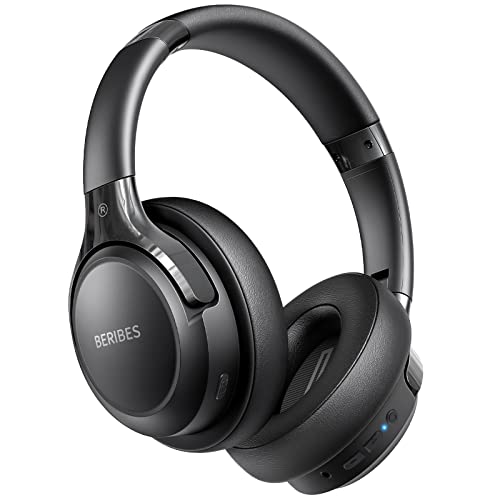
The BERIBES Bluetooth over-ear is our budget wireless pick. The listing advertises wireless HiFi stereo sound, a six mode equaliser, and up to 65 hours of rated playtime, which is a lot of listening between charges at this entry level. There is no active noise cancelling, so you rely on the passive seal of the ear cups, but for a first wireless over-ear or a knockabout second pair the value proposition is strong.
KVIDIO Wireless, best battery life
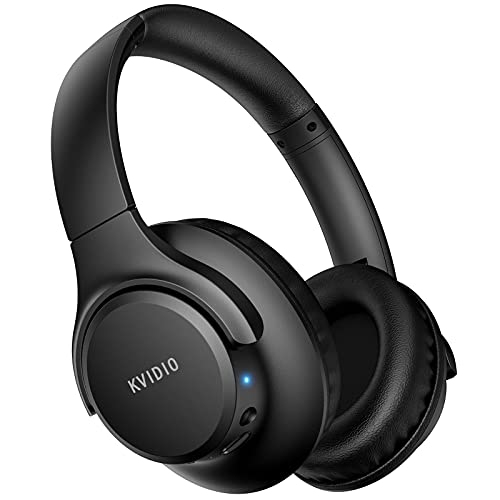
For the longest rated endurance, the KVIDIO wireless over-ear claims up to 65 hours of playtime on the listing, matching the top of this group. It is a straightforward Bluetooth headset for people who hate charging and want a pair that lasts through a week of commutes. Like most pairs at this level it leaves out active noise cancelling, leaning on the over-ear seal for isolation.
Sony WH-CH720N, best value
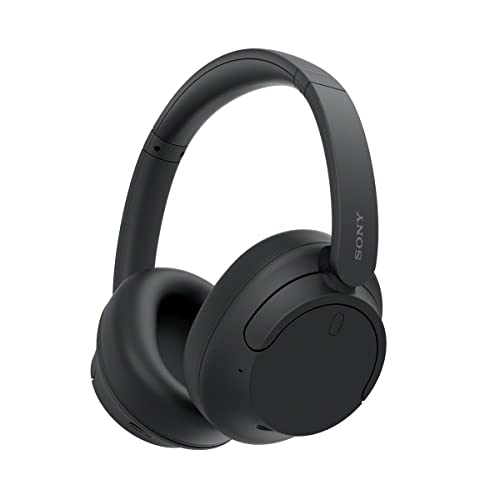
The Sony WH-CH720N is our value pick, a wireless noise cancelling over-ear that brings active noise control to a sensible tier. The listing describes it as a wireless noise cancelling over-ear, so you get the quiet of ANC and the convenience of Bluetooth without stepping up to flagship positioning. It is a good middle ground for listeners who want noise cancelling but do not need every premium extra.
How to choose over-ear headphones
Wireless vs wired. Wireless Bluetooth pairs are the most convenient for phones, travel, and moving around the house. Wired pairs avoid Bluetooth codec latency, which matters for studio monitoring, tracking instruments, and latency sensitive gaming. Some pairs, like the Beats Studio Pro, offer both a wireless mode and a USB-C wired mode so you can switch depending on the task.
Active noise cancelling. Active noise cancelling, or ANC, uses microphones to counter steady low frequency sounds such as plane and train rumble or office hum. It helps most for travel and open offices. In quiet rooms a good passive over-ear seal can be enough, and ANC models tend to cost more and use a little extra battery. In this guide the Bose, Beats, and Sony list ANC, while the BERIBES, KVIDIO, and OneOdio rely on passive isolation.
Battery life. Rated battery hours are a listing claim, but they are still useful for comparison. The BERIBES and KVIDIO both list up to 65 hours, the Beats lists up to 40 hours, and the Bose lists up to 24 hours. If you travel without a charger, a higher rated figure buys you more days between top ups. ANC and higher volume both shorten real world runtime.
Comfort and clamp for long wear. Over-ear cups spread pressure around the ear, but clamp force, cushion material, and weight still decide how a pair feels after a couple of hours. Softer cushions and a lighter frame are easier on long sessions, while a tighter clamp improves the seal at the cost of comfort. If you wear glasses, a gentler clamp and plush cushions matter even more.
Sound signature. Many consumer over-ear pairs lean toward boosted bass, which many listeners enjoy for pop and hip hop. Studio and DJ style cans aim for a flatter, more neutral balance so you hear the mix accurately. Some pairs, like the BERIBES, add equaliser modes so you can shift the tuning to taste.
Codecs and multipoint. Codec support such as a higher quality Bluetooth codec, and features like multipoint that keep two devices connected at once, are listing claims worth checking if you care about wireless audio quality or switching between a laptop and a phone. A wired or USB-C connection sidesteps codec questions entirely.
Foldability for travel. If you commute or fly, a pair that folds flat or into a smaller shape packs more easily into a bag or case. Not every listing states its folding design, so confirm it on the product page if travel packing is important to you.
Mic for calls. If you take calls or join meetings, a built in microphone matters. The Bose listing calls out a mic for calls, and most wireless over-ear pairs include one, but wired monitoring cans may not. Check the listing if clear call audio is part of your use.
A note on the specifications
Battery hours, driver size, noise cancelling, and codec support in this guide are listing claims from each manufacturer, not independent measurements. Wired pairs suit low latency and studio use, while active noise cancelling and good comfort matter most for travel. Use the numbers to shortlist, then confirm the current details on the live Amazon listing before you buy.
The bottom line
Whichever pair you shortlist, match the headphone to how you actually listen. Pick wired for the studio, long rated battery for travel without a charger, active noise cancelling for the commute, and a comfortable fit for long sessions. All six models here are current over-ear options, so start with the badge that matches your main use and compare the listed specs from there.