Lenses
Sony E Mount Lenses: Top Picks for Every Shooter
7 picks compared
6 min read
ProductPickly is reader-supported. When you buy through links on our site, we may earn an affiliate commission at no extra cost to you. It never changes our picks.
The short answerThe Sony FE 24-70mm f/2.8 GM II is the best overall for sharpness and speed. The Sigma 24-70mm f/2.8 DG DN Art offers top value. For budget, the Sony FE 50mm f/1.8 is a solid prime.
?How we pickedWe compare published specifications, safety certifications and thousands of verified owner reviews, and we do not physically test every unit. Read the full process in our review methodology.
Sony FE 24-70mm f/2.8 GM II
★★★★★ 4.9 / 5 Best Overall
This lens is the sharpest in its class, even wide open. It focuses fast and quietly for both photos and video. Owners praise its lightweight build and excellent handling.
Focal Length 24-70mmAperture f/2.8Weight 695gFilter Size 82mm
- Outstanding sharpness
- Fast, silent autofocus
- Weather-sealed
- Expensive
- No image stabilization
Sigma 24-70mm f/2.8 DG DN Art
★★★★★ 4.8 / 5 Best Value
Sigma delivers near-GM performance at a lower price. The lens is sharp and well-built, with a fast f/2.8 aperture. It is a favorite among hybrid shooters.
Focal Length 24-70mmAperture f/2.8Weight 835gFilter Size 82mm
- Sharp at all focal lengths
- Durable construction
- Aperture ring
- Heavier than Sony GM
- Lens hood is large
Sony FE 50mm f/1.8
★★★★★ 4.5 / 5 Best Budget
This prime is cheap and light, perfect for beginners. It produces pleasing bokeh and decent sharpness. Autofocus can be slow in low light.
Focal Length 50mmAperture f/1.8Weight 186gFilter Size 49mm
- Very affordable
- Compact and light
- Good bokeh
- Slow autofocus
- Plastic build
Sony FE 70-200mm f/4 Macro OSS
★★★★★ 4.8 / 5 Best for Travel and Macro
This lens covers a useful telephoto range with built-in stabilization. It offers a 0.5x macro mode for close-ups. Owners value its portability and image quality.
Focal Length 70-200mmAperture f/4Weight 840gFilter Size 72mm
- Image stabilization
- Macro capability
- Sharp across frame
- Not as fast as f/2.8
- Pricey for f/4
Best for: Best for Travel and Macro
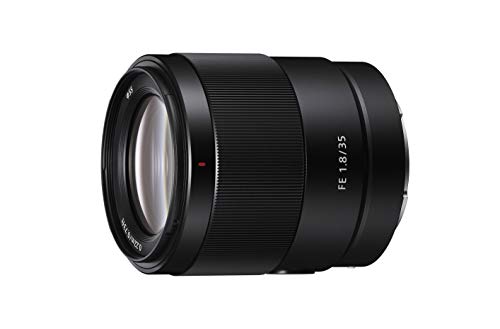
Sony FE 35mm f/1.8
★★★★★ 4.8 / 5 Best for Street Photography
This lens is small and light, ideal for everyday carry. It focuses quickly and quietly. The f/1.8 aperture works well in low light.
Focal Length 35mmAperture f/1.8Weight 280gFilter Size 55mm
- Compact and light
- Fast autofocus
- Good low-light performance
- Some distortion
- No optical stabilization
Best for: Best for Street Photography
Tamron 28-75mm f/2.8 Di III VXD G2
★★★★★ 4.8 / 5 Best for Video
Tamron's G2 version improves autofocus and adds a USB-C port. The lens is compact for a fast zoom. Video shooters like the smooth, quiet focus.
Focal Length 28-75mmAperture f/2.8Weight 540gFilter Size 67mm
- Lightweight for f/2.8
- Fast and quiet autofocus
- USB-C for updates
- Not as sharp as GM
- Plastic build
Sony FE 90mm f/2.8 Macro G OSS
★★★★★ 4.9 / 5 Best for Macro Photography
This lens delivers tack-sharp 1:1 magnification. It includes optical stabilization for handheld close-ups. Owners report excellent build and color rendering.
Focal Length 90mmAperture f/2.8Weight 602gFilter Size 62mm
- True 1:1 macro
- Image stabilization
- Excellent sharpness
- Heavy for a prime
- Autofocus can hunt
Best for: Best for Macro Photography
Full-frame FE lenses work on APS-C bodies, but crop factors change focal lengths. Third-party options from Sigma and Tamron offer excellent performance at lower prices. We focused on real-world strengths and weaknesses.
Focal Length and Aperture
Focal length determines your angle of view. Wide angles (16-35mm) suit landscapes and interiors. Standard zooms (24-70mm) cover everyday needs. Telephoto lenses (70-200mm) compress perspective for portraits and sports. Aperture controls light and depth of field. f/2.8 zooms are versatile but heavier. f/1.8 primes offer better low-light performance and bokeh.
Full-Frame vs APS-C
Sony E mount lenses work on both full-frame and APS-C cameras. On APS-C, the crop factor is 1.5x. A 50mm lens becomes a 75mm equivalent. This can be an advantage for telephoto reach. But wide-angle lenses lose their wide view. Full-frame lenses are larger and cost more. APS-C-specific lenses are smaller and cheaper, but limit future upgrades.
Autofocus and Stabilization
Sony's autofocus is fast and accurate, especially with newer bodies. Third-party lenses from Sigma and Tamron now match or exceed Sony's performance. Image stabilization in the lens helps with handheld shooting. This is crucial for telephoto and macro work. Check if your camera body has IBIS. If it does, lens stabilization may be redundant. But for video, stable footage is easier with OSS.
Build Quality and Weather Sealing
Professional lenses are weather-sealed against dust and moisture. They use metal mounts and high-quality plastics. Cheaper lenses may feel plasticky but are lighter. Consider your shooting environment. If you shoot outdoors in harsh conditions, invest in a sealed lens. For casual use, a lighter lens is easier to carry. Read owner reviews to gauge real-world durability.
Questions people ask
What is the best Sony E mount lens for portraits?
The Sony FE 85mm f/1.8 is a top choice for portraits. It offers sharpness and creamy bokeh. The 90mm macro also works well, but the 85mm is lighter and faster.
Are third-party Sony E mount lenses any good?
Yes, Sigma and Tamron produce excellent E mount lenses. They often match Sony's optical quality at lower prices. Autofocus is now very reliable. Many professionals use them.
What does E mount mean on Sony cameras?
E mount is Sony's mirrorless lens mount. It is used on both APS-C and full-frame cameras. FE lenses are for full-frame, while E lenses are for APS-C. Both fit the same mount.
Can I use Sony A-mount lenses on E mount cameras?
Yes, with an adapter like the LA-EA3 or LA-EA5. Autofocus may be slower, and some features are lost. Native E mount lenses are generally better for performance.
What is the difference between FE and E lenses?
FE lenses cover the full-frame sensor. E lenses are designed for APS-C sensors. FE lenses work on both, but E lenses on full-frame cause vignetting. Choose based on your camera.
Which Sony E mount lens is best for video?
The Tamron 28-75mm f/2.8 G2 is popular for video. It has smooth focus and a compact size. The Sony 24-70mm GM II is also excellent but pricier.
Is the Sony 50mm f/1.8 worth it?
Yes, for the price, it is a great value. It is sharp and light. But autofocus is slow, so it is not ideal for action. For portraits and everyday shots, it is a solid pick.
What is the best Sony E mount lens for low light?
Primes with f/1.4 or f/1.8 apertures are best. The Sony FE 35mm f/1.8 and 50mm f/1.8 are good. The 24-70mm f/2.8 GM II also performs well.
Do all Sony E mount lenses have image stabilization?
No, only some lenses have OSS. Many primes do not. If your camera has IBIS, you may not need it. Check your camera's specifications.
Which Sony E mount lens is best for travel?
The Sony FE 24-70mm f/2.8 GM II is versatile but heavy. The Tamron 28-75mm f/2.8 G2 is lighter. For a compact prime, the 35mm f/1.8 is ideal.
The bottom lineSo which one?
The Sony FE 24-70mm f/2.8 GM II is the top pick for professionals. For most shooters, the Sigma 24-70mm f/2.8 DG DN Art offers the best balance of price and performance. Budget buyers will be happy with the Sony 50mm f/1.8.