Film Cameras
Point and Shoot Film Cameras: Top Picks for 2026
7 picks compared
6 min read
ProductPickly is reader-supported. When you buy through links on our site, we may earn an affiliate commission at no extra cost to you. It never changes our picks.
The short answerThe best point and shoot film cameras are the Olympus MJU II for overall quality, the Canon Sure Shot 115u for value, and the Contax T2 for premium performance.
?How we pickedWe compare published specifications, safety certifications and thousands of verified owner reviews, and we do not physically test every unit. Read the full process in our review methodology.
Olympus MJU II
★★★★★ 4.8 / 5 Best Overall
The Olympus MJU II is a legendary compact with a 35mm f/2.8 lens. It is weatherproof and fits easily in a pocket. Owners praise its sharp images and reliable autofocus.
Lens 35mm f/2.8Focus AutofocusShutter 1/1000sFlash Built-in
- Excellent lens sharpness
- Weatherproof build
- Compact and light
- Expensive on the used market
- Limited manual controls
Canon Sure Shot 115u
★★★★★ 4.6 / 5 Best Value
The Canon Sure Shot 115u offers a 38-115mm zoom lens in a compact body. It is easy to find and affordable. Users like its sharp zoom and simple operation.
Lens 38-115mm f/4.5-6.7Focus AutofocusShutter 1/1000sFlash Built-in
- Versatile zoom range
- Affordable price
- Reliable autofocus
- Plastic build
- Zoom can be slow
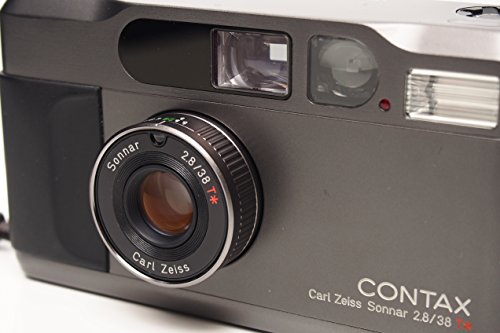
Contax T2
★★★★★ 4.7 / 5 Premium Choice
The Contax T2 is a titanium-bodied compact with a Carl Zeiss 38mm f/2.8 lens. It is known for exceptional sharpness and a premium feel. Photographers often call it a 'cult classic'.
Lens 38mm f/2.8 Carl ZeissFocus AutofocusShutter 1/1000sFlash Built-in
- Superb lens quality
- Luxurious titanium body
- Accurate exposure
Yashica T4
★★★★★ 4.5 / 5 Best for Street Photography
The Yashica T4 features a Carl Zeiss 35mm f/3.5 lens and a compact design. It is a favorite for street photographers due to its quick operation. The lens delivers impressive contrast and detail.
Lens 35mm f/3.5 Carl ZeissFocus AutofocusShutter 1/700sFlash Built-in
- Sharp Zeiss lens
- Fast autofocus
- Small and discreet
- Price has risen
- Plastic body
Best for: Best for Street Photography
Nikon L35AF
★★★★★ 4.4 / 5 Best for Beginners
The Nikon L35AF is a classic autofocus compact with a 35mm f/2.8 lens. It is straightforward to use, making it ideal for those new to film. Owners appreciate its consistent results.
Lens 35mm f/2.8Focus AutofocusShutter 1/1000sFlash Built-in
- Easy to use
- Good lens quality
- Affordable
- No zoom
- Battery life is average
Best for: Best for Beginners
Canon AF35M
★★★★★ 4.3 / 5 Best Retro Look
The Canon AF35M has a distinctive retro design and a 38mm f/2.8 lens. It is a popular choice for vintage enthusiasts. The camera is simple to operate and produces warm, nostalgic images.
Lens 38mm f/2.8Focus AutofocusShutter 1/500sFlash Built-in
- Iconic design
- Sharp lens
- Simple controls
- Heavier than others
- Limited features
Best for: Best Retro Look
Pentax Espio Mini
★★★★★ 4.2 / 5 Best for Travel
The Pentax Espio Mini is one of the smallest point and shoots, weighing just 170g. It has a 32mm f/3.5 lens and is perfect for travel. Users love its portability and ease of use.
Lens 32mm f/3.5Focus AutofocusShutter 1/500sFlash Built-in
- Very lightweight
- Sharp lens
- Pocket-friendly
- Fixed focal length
- Plastic build
Best for: Best for Travel
Choosing the right one depends on your budget, desired features, and image quality. We compared specifications, owner feedback, and real-world performance to narrow down the best options.
What to Look For
Start with the lens. A faster lens (like f/2.8) lets in more light, which helps in low light. Check the autofocus system. Some cameras have spot autofocus, which can be more precise. Consider the build quality. Metal bodies are more durable but heavier. Look at the flash capabilities. Some cameras have a red-eye reduction feature. Finally, think about the zoom range. A fixed focal length often gives sharper images.
How to Choose the Right Film
The film you choose affects the look of your photos. Color negative film is versatile and forgiving. Slide film produces vibrant colors but has less exposure latitude. Black and white film offers a classic, timeless feel. For beginners, ISO 400 color negative film is a safe choice. It works well in various lighting conditions. For outdoor daylight, ISO 100 film can give finer grain.
Common Features Explained
Autofocus systems vary. Some use infrared, others use contrast detection. Infrared can focus in the dark but may struggle with certain subjects. Exposure modes like program or aperture priority give you control. Some cameras have a self-timer for group shots. Red-eye reduction helps prevent red eyes in flash photos. A date imprint feature can add the date to your photos. These features can affect the price and usability.
Maintenance and Care
Keep the lens clean. Use a soft brush or microfiber cloth. Check the battery compartment for corrosion. Replace batteries promptly when low. Store the camera in a dry place. Avoid extreme temperatures. If the camera has a light seal, check it for wear. Replace seals if they are cracked or sticky. Regular use can prevent the shutter from sticking.
Questions people ask
What is a point and shoot film camera?
A point and shoot film camera is a compact camera with automatic exposure and focusing. You just point and press the shutter. It uses 35mm film.
Are point and shoot film cameras good for beginners?
Yes, they are very beginner-friendly. They handle all settings automatically. You can focus on composition and having fun.
What is the best point and shoot film camera for low light?
The Olympus MJU II with its f/2.8 lens is excellent for low light. The Contax T2 also performs well. A faster lens lets in more light.
How much does a good point and shoot film camera cost?
Prices vary widely. You can find decent ones for under Premium models like the Contax T2 can cost over It depends on brand and condition.
Can I use modern film in a point and shoot?
Yes, you can use any 35mm film. Most point and shoots accept ISO 100 to 400. Some can handle higher speeds. Check the camera's specs.
What is the difference between a point and shoot and a DSLR?
A DSLR has interchangeable lenses and manual controls. A point and shoot is fixed-lens and automatic. DSLRs are larger and heavier. Point and shoots are more portable.
Is the Contax T2 worth the price?
For many, yes. It offers superb lens quality and durability. But it is expensive. If you are on a budget, consider the Olympus MJU II or Canon Sure Shot.
How do I load film into a point and shoot?
Open the back, insert the film cartridge, pull the leader across, and close. The camera will advance automatically. Follow the camera's manual for specific steps.
What is the best point and shoot film camera for travel?
The Pentax Espio Mini is great for travel. It is tiny and light. The Olympus MJU II is also a good choice. Both are easy to carry.
The bottom lineSo which one?
The Olympus MJU II is the best overall for its sharp lens and reliability. For a budget option, the Canon Sure Shot 115u offers great value. Premium shooters will appreciate the Contax T2's superior optics.