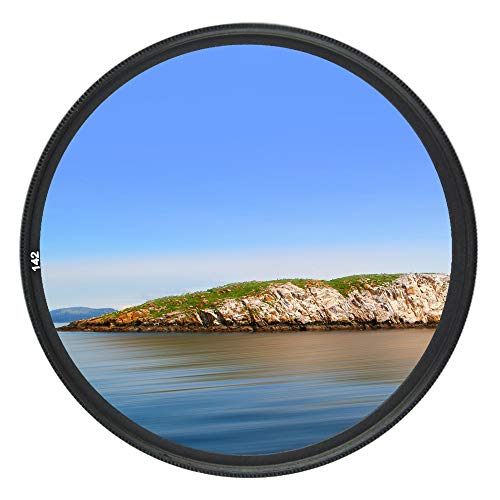
Lens Filters
Best Lens Filters for UV Protection, Polarizing, and Long Exposure
6 picks compared
9 min read
ProductPickly is reader-supported. When you buy through links on our site, we may earn an affiliate commission at no extra cost to you. It never changes our picks.
The short answerFor most people the K&F Concept MCUV protection filter is the standout pick because it threads onto the front of the lens and takes the scratches, dust, and fingerprints that would otherwise reach your glass, while its slim frame and 18-layer coating keep flare and colour shift low enough to leave it on all the time. From there, the K&F variable ND2-400 covers long exposures and video from one adjustable ring, the True Color ND plus polarizer folds two effects into a single filter, and the wide angle, diffusion, ND, and CPL set is the way to try several looks at once. The JJC 49mm UV is a simple budget protector sized for Canon's RF-S kit lens, and the K&F clip-on CPL brings polarizing to a phone. Choose by filter type first, then match the thread size in millimetres to your lens, because the right filter depends on what you shoot.
?How we pickedWe compare published specifications, safety certifications and thousands of verified owner reviews, and we do not physically test every unit. Read the full process in our review methodology.
K&F Concept 52mm MCUV Lens Protection Filter (Ultra Slim, 18-Layer Coating)
★★★★★ 4.5 / 5 Best overall
This is the filter we point most people to first, because a clear multi-coated UV sits on the front element and takes the scratches, dust, and fingerprints that would otherwise land on your glass. The ultra slim frame and 18-layer coating keep flare and colour shifts low, so it can stay on the lens for everyday shooting rather than coming off between shots.
Filter type MC-UV protectionThread 52mm (other sizes offered)Coating 18-layer multi-coatingFrame Ultra slim to limit vignetting
- Guards the front element from scratches and dust
- Multi-coating keeps flare and colour shift low
- Slim frame suits wide lenses
- Any filter adds one more glass surface
- You must match the exact thread size
Best for: everyday protection you can leave on the lens
K&F Concept 82mm Variable ND2-400 Filter (1 to 9 Stops)
★★★★★ 4.4 / 5 Best variable ND
A variable ND lets you dial the darkening from about one to nine stops by turning the ring, so one filter covers long daytime exposures and video shutter control without carrying a stack of fixed ND discs. It is the practical pick when you want smooth water, motion blur, or a wider aperture in bright light from a single piece of glass.
Filter type Variable ND (ND2 to ND400)Range About 1 to 9 stopsThread 82mm (other sizes offered)Use Long exposure and video
- One ring replaces several fixed ND filters
- Handy for daytime long exposure and video
- Fast to adjust on the fly
- Extreme settings can show an X pattern
- Costs more than a single fixed ND
Best for: one adjustable ND for stills and video
K&F Concept 82mm True Color Variable ND2-32 and Polarizer (2-in-1)
★★★★★ 4.4 / 5 Best ND plus polarizer
This one folds a circular polarizer and a variable ND into a single filter, so you can cut reflections and deepen a sky while also holding a slower shutter in bright light. The True Color glass is tuned to keep whites neutral through the range, which helps if the colour casts on cheaper variable NDs have bothered you before.
Filter type Variable ND2-32 plus CPLThread 82mm (other sizes offered)Colour True Color, neutral renderingUse Reflections and exposure control
- Polarizer and ND in one filter
- True Color glass keeps whites neutral
- Fewer filters to swap outdoors
- Two effects mean less independent control
- Narrower ND range than a dedicated ND
Best for: cutting glare and light in a single filter
K&F Concept Wide Angle, Black Diffusion 1/4, ND2-32 and CPL Filter Set
★★★★★ 4.3 / 5 Best filter set
If you want to try several looks, this set pairs a black diffusion filter for a softer, more cinematic highlight roll-off with a variable ND and a polarizer in one purchase. It suits creators building a small kit who would rather buy the common filters together than track down each one separately.
Includes Diffusion 1/4, ND2-32, CPLFilter type Multi-filter setDiffusion Softens highlights, adds bloomUse Video and creative stills
- Several creative looks in one buy
- Black diffusion softens harsh highlights
- Good value versus buying each alone
- You pay for filters you may not use
- Check the set fits your thread size
Best for: a starter kit of creative filters
JJC 49mm UV Filter for Canon EOS R100 R50 R10 RF-S 18-45mm Kit Lens
★★★★★ 4.3 / 5 Best budget UV
This is a straightforward protection UV cut to the 49mm thread of Canon's RF-S 18-45mm kit lens, so it is an easy first buy for a new mirrorless owner. It does the same job as a pricier protector, shielding the front glass from knocks and grit while keeping the image clear.
Filter type UV protectionThread 49mmFits Canon RF-S 18-45mm kit lensPurpose Front element protection
- Correct size for the RF-S 18-45mm lens
- Simple, low-cost front protection
- Easy first filter for a new camera
- Only the 49mm thread listed here
- Basic coating versus premium UVs
Best for: protecting a Canon RF-S kit lens for less
K&F Concept 52mm Clip-on CPL Phone Camera Lens Filter Kit
★★★★★ 4.2 / 5 Best for phones
Filters are not only for interchangeable-lens cameras, and this clip-on polarizer brings glare control to a phone by clamping over the camera without any thread to match. It is the pick for phone shooters who want deeper skies and fewer reflections off water and glass in the shots they already take.
Filter type Clip-on circular polarizerMount Clamp, no lens threadGlass 52mm optic in a clipUse Phone photography
- Adds a polarizer to a phone camera
- Clips on with no thread to match
- Cuts reflections and deepens skies
- Fit depends on the phone and case
- Only a polarizer, not a full set
Best for: polarizing shots taken on a phone
The best lens filter is the one that matches the job in front of you, because these are three different tools rather than one. A UV or protection filter guards the front glass, a circular polarizer cuts glare and deepens skies, and a neutral density filter darkens the scene so you can slow the shutter in bright light. Get the type right first, then match the thread size in millimetres to your lens, and the picks below cover protection, variable ND, a two-in-one, a creative set, a budget UV, and even a phone option.
UV protection, polarizers, and ND filters, explained simply
Start with what each filter is for. A UV or protection filter is clear glass that mostly shields the front element from scratches, dust, and knocks, with little visible effect on a modern digital photo, which is why it is the one people leave on all the time. A circular polarizer, or CPL, cuts reflections off water, glass, and leaves and can turn a pale sky a richer blue, and you rotate it to set how strong the effect is. A neutral density, or ND, filter acts like sunglasses for the lens and simply darkens everything by a set number of stops so you can use a slow shutter for smooth water or a wide aperture in daylight. None of these replaces another, so pick by the effect you need.
Matching the filter thread diameter to your lens
Filters screw on by thread size, measured in millimetres, and buying the wrong number is the most common mistake. The size is printed on the front of the lens or inside the cap, next to a small diameter symbol, so a lens marked with that symbol and 52 takes a 52mm filter and one marked 82 takes 82mm. That figure is the thread diameter, not the focal length, so read it off the lens itself rather than guessing from the model name. If you own several lenses with different threads, either buy a filter per size or use a step-up ring to fit one larger filter across them, which is cheaper than duplicating expensive glass.
Glass coatings and avoiding vignetting
Because a filter adds a glass surface in front of the lens, coatings and frame thickness decide how invisible it stays. Multi-coated glass, such as the 18-layer coating on our protection pick or the True Color glass on the two-in-one, keeps light transmission neutral and holds down flare and reflections, so a good filter has an effect most shots never reveal. Vignetting, the darkening in the corners, shows up when a thick ring or two stacked filters block light at the edges of a wide angle lens. Choose a slim or ultra slim frame for wide lenses, avoid stacking filters where you can, and check the corners at your widest focal length before you rely on a setup.
Filter kits versus single filters
The last choice is whether to buy one filter or a set. A single filter, like the protection UV or a variable ND, is the right call when you know the one effect you need and want the best glass for that job. A kit, such as the set that bundles black diffusion, a variable ND, and a polarizer, makes sense when you want to try several looks or you are building a small kit from scratch and would rather not track down each filter separately. Buy singles when your need is specific, and a set when you want range for the money, and in both cases confirm the thread size fits the lens you plan to use it on.
Questions people ask
What does a lens filter actually do?
A lens filter is a disc of glass that threads onto the front of your lens and changes or protects what reaches the sensor. A UV or protection filter shields the front element from scratches, dust, and fingerprints, a circular polarizer cuts reflections and deepens skies, and a neutral density filter darkens the whole scene so you can use a slower shutter or wider aperture in bright light. Each one solves a different problem, so the right filter depends on what you shoot rather than any single filter being best for everything.
Which lens filter should I buy first?
For most people a clear multi-coated protection or UV filter is the sensible first buy, since it stays on the lens and takes the everyday wear that would otherwise land on expensive glass. Our overall pick is the K&F Concept MCUV because its slim frame and multi-coating keep flare and colour shift low while it protects the front element. After that, add a circular polarizer for reflections and skies, and a neutral density filter if you want long exposures or shallow depth of field in daylight.
How do I know which filter size fits my lens?
Filters are sold by thread diameter in millimetres, and the number is usually printed on the front of the lens or inside the lens cap next to a diameter symbol. A lens marked with that symbol and 52 needs a 52mm filter, one marked 82 needs 82mm, and so on. The figure is the filter thread size, not the focal length, so always read it off the lens itself before ordering, because a filter that is even one size off will not screw on.
What is the difference between a UV filter, a polarizer, and an ND filter?
A UV or protection filter is clear and mainly guards the front glass while having little visible effect on a modern digital image. A circular polarizer, or CPL, cuts glare off water, glass, and foliage and can deepen a blue sky, and you rotate it to set the strength. A neutral density, or ND, filter is like sunglasses for the lens and simply darkens the scene by a set number of stops so you can slow the shutter or open the aperture in bright light without overexposing.
What is a variable ND filter and when is it worth it?
A variable ND combines the effect of several fixed ND filters into one ring you turn to dial the darkening, on these models from about one to nine stops. It is worth it when light changes often or you shoot both stills and video, because you adjust exposure on the fly instead of unscrewing and swapping fixed discs. The trade-off is that at the strongest settings a variable ND can show an uneven X pattern across the frame, so many people keep to the middle of the range.
Will a cheap filter hurt my image quality?
A filter adds a glass surface in front of the lens, so a poorly made one can add flare, softness, or a colour cast, which is why coatings matter. Multi-coated glass, like the 18-layer coating on our top pick or the True Color glass on the two-in-one, is designed to keep light transmission neutral and reflections low. A well-coated filter from a known maker has a minor effect that most shots never reveal, while the cheapest uncoated glass is where visible problems tend to show up.
What causes vignetting with filters and how do I avoid it?
Vignetting is darkening in the corners of the frame, and with filters it happens when a thick filter ring, or two filters stacked together, blocks light at the edges of a wide angle lens. To avoid it, choose a slim or ultra slim frame like the one on our protection pick, avoid stacking several filters on a wide lens, and test at your widest focal length. On longer lenses the risk is much lower, so a standard frame is usually fine there.
How did we choose the lens filters in this guide?
We looked at the job each filter does, protection, polarizing, or neutral density, along with coating quality, frame thickness, the range a variable ND covers, and how well each suits a common shooter, from a new mirrorless owner to a phone user. Every product shown is a real current listing, and these are our chosen picks rather than lab tested claims, so treat filter type and thread fit as the decisions that matter most for your own lens.
The bottom lineSo which one?
The K&F Concept MCUV protection filter is our top choice because it shields the front element from everyday wear while its slim frame and 18-layer coating keep the image clean, which makes it the filter to leave on the lens. For creative control the variable ND2-400 handles long exposures and video from one ring, the True Color ND plus polarizer combines glare and light control, and the diffusion, ND, and CPL set is the pick for trying several looks. The JJC 49mm UV is the low-cost protector for a Canon RF-S kit lens, and the clip-on CPL adds polarizing to a phone. Let the filter type and the thread size in millimetres lead your decision, and remember these are our chosen picks rather than lab tested claims.