Binoculars Telescopes and Optics
Kids Telescopes: Top Picks for Young Stargazers
7 picks compared
6 min read
ProductPickly is reader-supported. When you buy through links on our site, we may earn an affiliate commission at no extra cost to you. It never changes our picks.
The short answerFor most kids, the Celestron FirstScope 76 Tabletop Dobsonian offers simple setup and clear views. The Orion StarBlast II 4.5 EQ provides more power for older kids. The Gskyer 600x90mm Telescope balances features and ease for families.
?How we pickedWe compare published specifications, safety certifications and thousands of verified owner reviews, and we do not physically test every unit. Read the full process in our review methodology.
Celestron FirstScope 76 Tabletop Dobsonian
★★★★★ 4.6 / 5 best overall for young kids
This tabletop Dobsonian has a 76mm aperture and a 300mm focal length. It is lightweight and easy to carry. The altazimuth mount moves smoothly.
Aperture 76mmFocal Length 300mmMount AltazimuthEyepieces 20mm and 10mm
- Very portable
- No tripod needed
- Simple to aim
- Limited magnification
- Table required
Best for: best overall for young kids
Orion StarBlast II 4.5 EQ
★★★★★ 4.7 / 5 best for older kids
A 114mm reflector on an equatorial mount. It delivers bright views of the Moon and planets. The included tripod is sturdy.
Aperture 114mmFocal Length 450mmMount EquatorialTripod Steel
- Great light gathering
- Smooth tracking
- Includes two eyepieces
- Steeper learning curve
- Heavier setup
Best for: best for older kids
Gskyer 600x90mm Telescope
★★★★★ 4.5 / 5 best value for families
A 90mm refractor with a 600mm focal length. It comes with a tripod and a phone adapter. The adjustable aluminum tripod is stable.
Aperture 90mmFocal Length 600mmTripod AluminumMagnification Up to 300x
- Clear images
- Easy to assemble
- Includes smartphone mount
- Finder scope is small
- Tripod can be wobbly
Best for: best value for families
Educational Insights GeoSafari Jr. Talking Telescope
★★★★★ 4.4 / 5 best for preschoolers
This toy telescope features 20 slides with images of space. It plays over 200 facts and quizzes. It is designed for ages 4 and up.
Type Toy telescopeSlides 20Audio 200+ factsAge Range 4+
- Teaches space facts
- No assembly
- Durable plastic
- Not a real telescope
- Requires 3 AAA batteries
Best for: best for preschoolers
Celestron PowerSeeker 70AZ
★★★★★ 4.3 / 5 best budget pick
A 70mm refractor with a 700mm focal length. It includes a tripod and a finderscope. The altazimuth mount is easy for kids to use.
Aperture 70mmFocal Length 700mmMount AltazimuthEyepieces 20mm, 10mm, 4mm
- Very affordable
- Lightweight
- Includes accessory kit
- Small aperture
- Tripod is not very sturdy
Best for: best budget pick
Unistellar eQuinox 2 Smart Telescope
★★★★★ 4.5 / 5 best for tech-savvy teens
This digital telescope uses a smartphone app to locate objects. It captures images and shares them instantly. It is fully automated.
Type Digital telescopeSensor Sony IMX347App iOS and AndroidStorage Cloud
- No eyepiece needed
- Auto alignment
- Great for astrophotography
Best for: best for tech-savvy teens
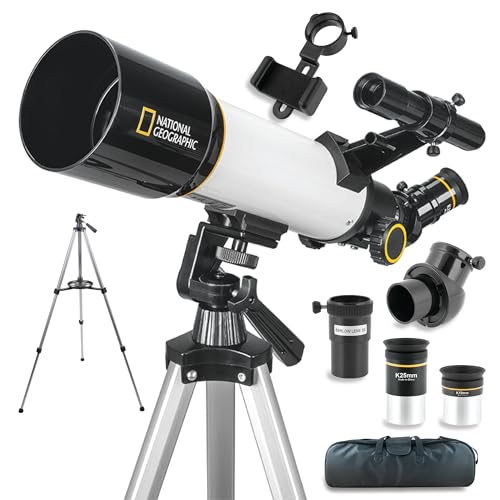
National Geographic 70mm Telescope
★★★★★ 4.4 / 5 best for beginners with extras
A 70mm refractor with a 400mm focal length. It comes with a tripod, a backpack, and a moon map. The included software offers astronomy guides.
Aperture 70mmFocal Length 400mmTripod AluminumIncluded Backpack, moon map, software
- Great value for accessories
- Portable
- Good for terrestrial viewing
- Small aperture
- Mount can be shaky
Best for: best for beginners with extras
Aperture size matters most for viewing detail. But a wobbly mount frustrates young users. We prioritized stability and ease of use for each age group.
What to Look For in a Kids Telescope
Start with aperture, the size of the main lens or mirror. Bigger aperture gathers more light, showing fainter objects. For kids, a 70mm to 90mm aperture is a good range. Also consider the mount. A stable tripod prevents frustrating wobbles. Look for simple controls that small hands can manage.
Types of Telescopes for Kids
Refractors use lenses and are easy to use. Reflectors use mirrors and offer more aperture for the price. Dobsonian mounts are simple and sturdy, great for tabletop use. Smart telescopes are app-based and can be engaging for older kids. Choose based on your child's age and interest.
Age-Appropriate Features
Preschoolers need durable, toy-like scopes with educational content. Elementary kids can handle simple refractors or tabletop Dobs. Tweens and teens can learn equatorial mounts or smart scopes. Always check the recommended age range. Safety is key, so ensure the scope has a solar filter if used during the day.
Accessories and Setup
Most kits include eyepieces, a finder scope, and a tripod. Extra eyepieces offer different magnifications. A moon filter reduces glare. Consider a smartphone adapter for astrophotography. Setup should take less than 15 minutes. A quick assembly keeps kids engaged.
Questions people ask
What is the best telescope for a 5-year-old?
The Educational Insights GeoSafari Jr. Talking Telescope is ideal. It is a toy that teaches facts. For a real scope, the Celestron FirstScope is safe and simple.
How do I choose a telescope for a child?
Consider age, interest, and budget. For young kids, pick a sturdy tabletop model. For older kids, a reflector with a stable mount offers more power.
Can kids use a telescope without help?
Many refractors and tabletop Dobs are easy. Smart telescopes are even simpler. But adult help is useful for alignment and focusing.
What can kids see with a 70mm telescope?
They can see the Moon's craters, Jupiter's moons, and Saturn's rings. They can also view star clusters and the Orion Nebula.
Is a smart telescope worth it for kids?
If your child is tech-savvy, yes. It automates finding objects and can capture images. But it is expensive and may not teach manual skills.
How much should I spend on a kids telescope?
Budget models start around Good beginner scopes cost to Premium smart scopes can exceed Set a budget based on your child's interest.
What is the difference between a refractor and a reflector?
Refractors use lenses and are usually more compact. Reflectors use mirrors and offer larger apertures for less money. Reflectors may need more maintenance.
Do kids telescopes need a solar filter?
Yes, if you plan to view the Sun. Never point any telescope at the Sun without a proper filter. This can cause permanent eye damage.
The bottom lineSo which one?
The Celestron FirstScope 76 is the best all-around choice for young kids. For older children, the Orion StarBlast II offers more power. Consider your child's age and interest to pick the right one.