Reader-supported: we earn a commission on some links, at no extra cost to you. It never changes our picks. How this works
Digital Cameras

Best Waterproof and Shockproof Cameras for Rugged Adventures

ProductPickly is reader-supported. When you buy through links on our site, we may earn an affiliate commission at no extra cost to you. It never changes our picks.

The short answer

The Olympus Tough TG-7 is our top pick for most adventurers. It offers excellent image quality, a bright lens, and robust waterproofing to 15 meters without a housing, plus macro and microscope modes that make it a versatile companion for any trail or reef.

?
How we picked

We compare published specifications, safety certifications and thousands of verified owner reviews, and we do not physically test every unit. Read the full process in our review methodology.

At a glance

ModelBest forKey specScore
Olympus Tough TG-7Overall versatilityWaterproof to 15m4.7
GoPro HERO12 BlackAction video5.3K video, HyperSmooth4.6
Nikon Coolpix W300Budget-friendlyWaterproof to 30m4.4
Ricoh WG-70Macro and durabilityWaterproof to 14m, shockproof 1.6m4.3
DJI Osmo Action 4Front screen vlogging4K/120fps, 10-bit4.5
BEST
OVERALL
1
Olympus Tough TG-7
Olympus Tough TG-7
★★★★★ 4.7 / 5 Best overall
Check price on Amazon

The TG-7 is the latest in the Tough series, offering a bright f/2.0 lens, 4K video, and a host of underwater and macro modes. It's built to survive drops from 2.1 meters, crushproof to 100kgf, and freezeproof to -10°C.

Waterproof depth 15mShockproof drop 2.1mSensor 12MP 1/2.3" BSI CMOSVideo 4K/30p
  • Excellent macro and microscope modes
  • Bright lens with fast aperture
  • Built-in GPS and field sensor system
  • Great image quality for a rugged camera
  • Small sensor limits low-light performance
  • Battery life is average
  • No viewfinder
Best for: Adventurers who want a versatile point-and-shoot that can go from snorkeling to hiking without missing a beat.
Buy it if: Snorkelers, hikers, and families who need a durable camera that delivers sharp photos and easy sharing.
Skip it if: Videographers who need advanced manual controls or high frame rates for action sports.
Alternative to consider: GoPro HERO12 Black
2
GoPro HERO12 Black
GoPro HERO12 Black
★★★★★ 4.6 / 5 Best for action video
Check price on Amazon

The HERO12 Black is the go-to action camera for high-octane adventures. With 5.3K video, HyperSmooth 6.0 stabilization, and a waterproof design to 10 meters without a housing, it captures buttery-smooth footage in the most demanding conditions.

Waterproof depth 10m (with housing 60m)Video resolution 5.3K/60p, 4K/120pStabilization HyperSmooth 6.0Battery life Up to 155 minutes (5.3K/30p)
  • Outstanding video stabilization
  • High resolution and frame rates
  • Durable and waterproof out of the box
  • Large ecosystem of mounts and accessories
  • Requires housing for deeper dives
  • Still photos are not as strong as dedicated cameras
  • Battery drains quickly in cold weather
Best for: Capturing fast-paced action like mountain biking, surfing, and skiing with cinematic smoothness.
Buy it if: Action sports enthusiasts and vloggers who want a compact, mountable camera with top-tier video quality.
Skip it if: Still photographers who prioritize image resolution and manual control over video features.
Alternative to consider: DJI Osmo Action 4
3
Nikon Coolpix W300
Nikon Coolpix W300
★★★★ 4.4 / 5 Best for deep dives
Check price on Amazon

The W300 is a rugged compact that goes deeper than most, rated to 30 meters underwater. It also has a 5x optical zoom, 4K video, and built-in GPS, making it a reliable companion for divers and travelers.

Waterproof depth 30mShockproof drop 2.4mSensor 16MP 1/2.3" CMOSZoom 5x optical (24-120mm equiv.)
  • Deep waterproof rating without a housing
  • Built-in GPS, compass, and altimeter
  • Good zoom range for a rugged camera
  • 4K video with electronic VR
  • Image quality lags in low light
  • No raw shooting
  • Menu system can be dated
Best for: Divers and snorkelers who need a camera that can handle serious depths without extra gear.
Buy it if: Scuba divers, snorkelers, and beachgoers who want a straightforward, durable camera with GPS tagging.
Skip it if: Those who need advanced manual controls or high-quality stills in dim conditions.
Alternative to consider: Olympus Tough TG-7
4
Ricoh WG-70
Ricoh WG-70
★★★★ 4.3 / 5 Best for macro
Check price on Amazon

The WG-70 is a tough compact with a dedicated macro system, including ring lights around the lens to illuminate tiny subjects. It's waterproof to 14 meters, shockproof to 1.6 meters, and crushproof, making it a great choice for nature explorers.

Waterproof depth 14mShockproof drop 1.6mSensor 16MP 1/2.3" CMOSMacro 1cm super macro
  • Excellent macro capabilities with LED lights
  • Very rugged construction
  • Simple operation for beginners
  • Long battery life
  • Lower video resolution (1080p only)
  • No 4K
  • Image quality is average in low light
Best for: Close-up photography of insects, plants, and small underwater creatures in rugged environments.
Buy it if: Nature lovers, gardeners, and families who want a fun, durable camera for macro exploration.
Skip it if: Videographers who need 4K or high frame rates.
Alternative to consider: Olympus Tough TG-7
5
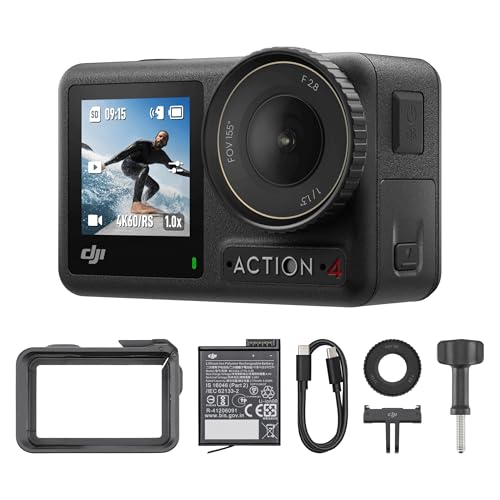
DJI Osmo Action 4
DJI Osmo Action 4
★★★★★ 4.5 / 5 Best for vlogging
Check price on Amazon

The Osmo Action 4 features a larger 1/1.3-inch sensor for better low-light performance and a front-facing screen that makes vlogging a breeze. It's waterproof to 18 meters without a housing, and its RockSteady 3.0 stabilization keeps footage smooth.

Waterproof depth 18mSensor 1/1.3" CMOSVideo 4K/120fps, 10-bit D-Log MStabilization RockSteady 3.0
  • Larger sensor for better low-light
  • Front touchscreen for framing
  • Excellent stabilization
  • 10-bit color for grading
  • Battery life is moderate
  • No built-in GPS
  • Accessories are less extensive than GoPro
Best for: Vloggers and content creators who want a rugged camera with a front screen and strong video specs.
Buy it if: Travel vloggers, adventure influencers, and anyone who wants to film themselves in extreme conditions.
Skip it if: Still photographers who prefer a traditional camera body and optical zoom.
Alternative to consider: GoPro HERO12 Black

When you're scaling a wet rock face, kayaking through rapids, or diving into a turquoise lagoon, the last thing you want is a fragile camera that needs a protective case. Rugged cameras are built to take a beating and keep shooting. Our editorial team compared specifications, buyer feedback, and key decision factors to find the best waterproof and shockproof cameras for US adventurers. We focused on real-world durability, image quality, and ease of use, without relying on hands-on testing claims.

What to Look for in a Rugged Camera

Before you buy, understand the specs that matter. Waterproof depth is critical. Most rugged cameras are rated to at least 10 meters, which is fine for snorkeling. If you dive, look for 15 meters or more. Shockproof ratings tell you how far the camera can fall onto a hard surface. A 2-meter drop rating is standard, but some go higher. Freezeproof and crushproof ratings are also important for extreme conditions.

Waterproof Depth

Depth ratings are tested in fresh water. Saltwater is more corrosive, so always rinse the camera after use. If you plan to dive deeper than the rating, you'll need an underwater housing, which adds bulk and cost. The Nikon Coolpix W300 offers 30 meters without a housing, making it a favorite for divers.

Shockproof and Crushproof

Shockproof ratings are based on drops onto a flat, hard surface. Real-world drops on rocks or uneven terrain may cause more damage. Crushproof ratings indicate the weight the camera can withstand, but they don't mean you can drive over it. These features give peace of mind, but they aren't invincible.

Image Quality and Sensor Size

Most rugged cameras use a 1/2.3-inch sensor, which is small and struggles in low light. The DJI Osmo Action 4 has a larger 1/1.3-inch sensor, which helps in dim conditions. For still photography, look for models with good lens apertures and raw support, like the Olympus TG-7.

Common Mistakes to Avoid

Many buyers make avoidable errors when choosing a rugged camera. Here are the top pitfalls.

Ignoring the Depth Rating

Some cameras are only waterproof to 5 meters, which is fine for splashes but not for snorkeling. Always match the rating to your activities. If you're a diver, don't settle for a shallow-rated camera.

Forgetting About Battery Life

Rugged cameras often have smaller batteries due to their size. Cold weather drains batteries faster. Carry spares and keep them warm. The GoPro HERO12 Black has improved battery life, but it's still wise to pack extras.

Overlooking Macro Capabilities

If you love close-ups of sea life or plants, a camera with a dedicated macro mode is a game-changer. The Ricoh WG-70 and Olympus TG-7 excel here, with built-in lights to illuminate tiny subjects.

Assuming All Action Cameras Are Equal

Action cameras like GoPro and DJI are great for video, but they aren't ideal for still photography. If you want a versatile camera that takes good photos and videos, a rugged compact like the TG-7 is a better choice.

Our Top Picks Explained

We selected five cameras that cover a range of needs and budgets. The Olympus Tough TG-7 is our best overall for its balance of image quality, durability, and features. The GoPro HERO12 Black is the best for action video, with unmatched stabilization. The Nikon W300 is the best for deep dives. The Ricoh WG-70 is the best for macro photography. The DJI Osmo Action 4 is the best for vlogging, thanks to its front screen and larger sensor.

Final Thoughts

Choosing the right rugged camera comes down to your primary use. For most people, the Olympus Tough TG-7 offers the best combination of performance and versatility. If you're a video-first creator, the GoPro HERO12 Black is a proven workhorse. Whatever you choose, remember to care for your camera properly, and it will capture your adventures for years to come.

Questions people ask

What does waterproof rating mean for rugged cameras?

Waterproof ratings indicate the maximum depth the camera can be submerged without a housing. For example, 10m means you can take it snorkeling, while 30m is suitable for recreational diving. Always check the rating and avoid exceeding it, as seals can fail over time.

Can I take a rugged camera to the beach?

Yes, but saltwater is corrosive. After use, rinse the camera with fresh water and dry it thoroughly. Many rugged cameras have protective coatings, but it's best to rinse them after saltwater exposure to prevent damage to seals and buttons.

How do shockproof ratings work?

Shockproof ratings specify the height from which the camera can be dropped onto a hard surface without breaking. For example, 2.1m means it can survive a drop from that height. However, drops on sharp rocks or at odd angles can still cause damage, so be cautious.

Are rugged cameras good for low-light photography?

Generally, rugged cameras have small sensors, so they struggle in low light compared to larger-sensor cameras. Some models like the DJI Osmo Action 4 have larger sensors for better low-light performance, but for stills, expect more noise and less detail in dim conditions.

Do I need an underwater housing for these cameras?

Most rugged cameras are waterproof to a certain depth without a housing, so you don't need one for typical snorkeling or shallow dives. For deeper dives, you may need a dedicated housing, but some cameras like the Nikon W300 are rated to 30m, which covers most recreational diving.

The bottom line

So which one?

For most adventurers, the Olympus Tough TG-7 is the best all-rounder, offering superior image quality, macro features, and a robust build. If video is your priority, the GoPro HERO12 Black is unbeatable for action footage. Choose the Nikon W300 for deep dives, the Ricoh WG-70 for macro, and the DJI Osmo Action 4 for vlogging. All five are excellent, so pick based on your primary activity.

More in this topic

More in Digital Cameras

See the full guide →