Binoculars Telescopes and Optics
Best Telescopes for Astrophotography in 2026
7 picks compared
6 min read
ProductPickly is reader-supported. When you buy through links on our site, we may earn an affiliate commission at no extra cost to you. It never changes our picks.
The short answerFor most astrophotographers, the Celestron NexStar 8SE, Sky-Watcher Evostar 100ED, and ZWO Seestar S50 are top choices. The NexStar offers a solid mount, the Evostar excels in color correction, and the Seestar is a smart, portable option.
?How we pickedWe compare published specifications, safety certifications and thousands of verified owner reviews, and we do not physically test every unit. Read the full process in our review methodology.
Celestron NexStar 8SE
★★★★★ 4.7 / 5 best overall for deep-sky
The NexStar 8SE has an 8-inch Schmidt-Cassegrain optical tube on a computerized alt-azimuth mount. Its large aperture collects plenty of light for galaxies and nebulae. The mount's GoTo system automatically finds thousands of objects, making it beginner-friendly.
Aperture 203.2 mmFocal Length 2032 mmFocal Ratio f/10Mount Type Computerized Alt-Azimuth
- Large aperture for its price
- GoTo mount finds objects quickly
- Compact and portable for its size
- Alt-azimuth mount requires field rotation for long exposures
- Standard wedge is not included
Best for: best overall for deep-sky
Sky-Watcher Evostar 100ED
★★★★★ 4.8 / 5 best for wide-field and color accuracy
The Evostar 100ED is a 100mm doublet refractor with extra-low dispersion glass. It delivers sharp, high-contrast images with minimal chromatic aberration. Its 900mm focal length is ideal for wide-field shots of the Milky Way and large nebulae.
Aperture 100 mmFocal Length 900 mmFocal Ratio f/9Optical Design ED Doublet Refractor
- Excellent color correction
- Sharp stars across the field
- Lightweight for its aperture
- Requires a separate equatorial mount
- Smaller aperture than reflectors for the price
Best for: best for wide-field and color accuracy
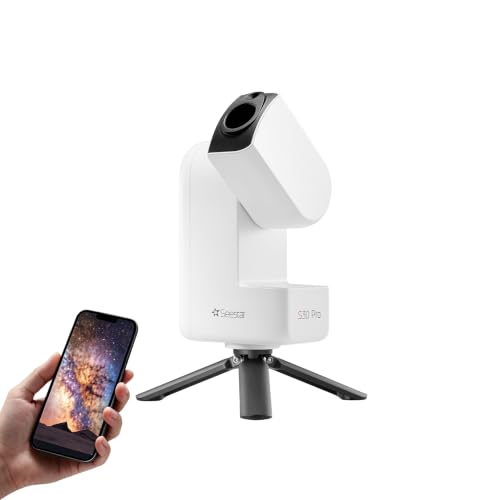
ZWO Seestar S50
★★★★★ 4.7 / 5 best smart telescope for beginners
The Seestar S50 is an all-in-one smart telescope with a built-in 50mm refractor and a dedicated astronomy camera. It automatically aligns, platesolves, and stacks images with a few taps on your smartphone. Its integrated dew heater and filter wheel simplify the imaging process.
Aperture 50 mmFocal Length 250 mmFocal Ratio f/5Sensor Sony IMX462
- Fully automated operation
- No laptop or separate camera needed
- Portable and quick to set up
- Small aperture limits faint deep-sky detail
- Fixed focal length, no manual control
Best for: best smart telescope for beginners
Celestron AstroMaster 130EQ
★★★★★ 4.4 / 5 best budget telescope for beginners
The AstroMaster 130EQ is a 130mm Newtonian reflector on an equatorial mount. It offers a good balance of aperture and affordability for entry-level astrophotography. The manual mount requires learning to track objects, but it is a solid foundation.
Aperture 130 mmFocal Length 650 mmFocal Ratio f/5Mount Type Manual Equatorial
- Large aperture for the price
- Equatorial mount allows longer exposures
- Includes two eyepieces and a finderscope
- Manual tracking can be challenging
- Stability may be limited for heavy cameras
Best for: best budget telescope for beginners
Orion 10016 StarBlast 6
★★★★★ 4.6 / 5 best for wide-field Milky Way shots
The StarBlast 6 is a 150mm tabletop Dobsonian reflector with a short 750mm focal length. Its fast f/5 focal ratio is great for capturing wide swaths of the night sky. The compact design makes it easy to transport to dark-sky sites.
Aperture 150 mmFocal Length 750 mmFocal Ratio f/5Mount Type Tabletop Dobsonian
- Fast focal ratio for wide-field imaging
- Large aperture for its size
- Simple, sturdy tabletop mount
- Manual tracking needed
- Not ideal for high-magnification planetary shots
Best for: best for wide-field Milky Way shots
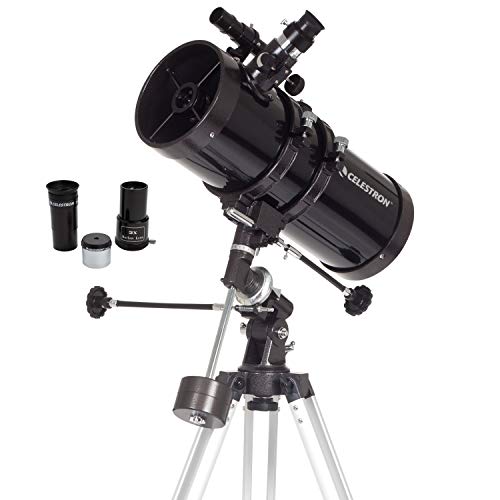
Celestron PowerSeeker 127EQ
★★★★★ 4.2 / 5 best for planetary imaging on a budget
The PowerSeeker 127EQ is a 127mm Newtonian reflector on an equatorial mount. Its long 1000mm focal length provides high magnification for lunar and planetary detail. The included motor drive helps track objects for short video captures.
Aperture 127 mmFocal Length 1000 mmFocal Ratio f/7.9Mount Type Equatorial with motor drive
- Long focal length for planets
- Motor drive aids tracking
- Includes accessory kit
- Smaller aperture than some reflectors
- Mount stability can be an issue
Best for: best for planetary imaging on a budget
Vaonis Vespera
★★★★★ 4.5 / 5 best for portability and all-in-one design
The Vespera is a compact smart telescope with a 50mm refractor and a built-in camera. It weighs under 5 kg and sets up in minutes. Its app-driven operation makes it a favorite for travel and quick sessions.
Aperture 50 mmFocal Length 250 mmFocal Ratio f/5Weight 4.5 kg
- Ultra-portable and lightweight
- Fully automated with companion app
- Built-in solar filter for daytime use
- Small aperture limits faint objects
- Premium price for the aperture
Best for: best for portability and all-in-one design
We compared specifications, owner feedback, and use-case fit to pick the best scopes for different needs and budgets.
Aperture and Focal Length
Aperture determines how much light you collect. Larger apertures reveal fainter galaxies and nebulae. Focal length affects magnification and field of view. Short focal lengths are better for wide-field shots, while long ones suit planets. For deep-sky, a fast focal ratio like f/5 or f/6 is ideal.
Mount Stability and Tracking
A stable mount is crucial for sharp images. Equatorial mounts compensate for Earth's rotation, allowing longer exposures. Alt-azimuth mounts are simpler but cause field rotation. Computerized GoTo mounts find targets automatically, but manual mounts require skill. For astrophotography, invest in a solid mount first.
Camera Compatibility
Most telescopes accept DSLR or mirrorless cameras via T-rings and adapters. Some scopes, like smart telescopes, have built-in cameras. Check the focuser's travel to ensure you can reach focus with your camera. Dedicated astronomy cameras offer better cooling and sensitivity but cost more.
Portability and Setup Time
Consider how often you'll travel to dark sites. Large scopes may be heavy and time-consuming to set up. Smart telescopes are quick and easy, but they have small apertures. Balance your desire for performance with the convenience you need.
Questions people ask
What is the best telescope for astrophotography for beginners?
The Celestron NexStar 8SE is a great choice due to its GoTo mount and large aperture. For a budget option, the Celestron AstroMaster 130EQ offers an equatorial mount at a low price.
Can I use any telescope for astrophotography?
Yes, but results vary. You need a stable mount and the ability to attach a camera. Some telescopes are better suited than others.
What is the difference between equatorial and alt-azimuth mounts?
Equatorial mounts align with Earth's axis, allowing long exposures without field rotation. Alt-azimuth mounts are simpler but cause field rotation, limiting exposure time.
Do I need a GoTo mount for astrophotography?
Not necessarily, but GoTo makes finding targets easier. Manual mounts require more skill but can produce great results with practice.
What is the best telescope for deep-sky astrophotography?
The Celestron NexStar 8SE and Sky-Watcher Evostar 100ED are excellent. The NexStar has more aperture, while the Evostar offers better color correction.
Can I use a Dobsonian telescope for astrophotography?
Yes, but only for short exposures or planetary imaging. Dobsonians lack tracking, so long-exposure deep-sky imaging is difficult.
What is a smart telescope?
A smart telescope has a built-in camera and computer that automates imaging. Examples include the ZWO Seestar S50 and Vaonis Vespera.
Is a refractor or reflector better for astrophotography?
Refractors offer better contrast and color correction, but reflectors give more aperture for the price. Your choice depends on your budget and targets.
How much should I spend on a telescope for astrophotography?
Entry-level scopes start around a few hundred dollars, but serious imaging often requires a budget of over a thousand. Smart telescopes offer a middle ground.
What is the best telescope for planetary astrophotography?
The Celestron PowerSeeker 127EQ is a budget option with a long focal length. For higher quality, consider a larger aperture scope like an 8-inch Schmidt-Cassegrain.
The bottom lineSo which one?
Choose a telescope based on your skill level, budget, and targets. The Celestron NexStar 8SE is a versatile all-rounder, while the ZWO Seestar S50 is perfect for beginners. For wide-field shots, the Sky-Watcher Evostar 100ED stands out.