Lighting and Studio
Best Studio Lighting Kits for Video and Photo
7 picks compared
6 min read
ProductPickly is reader-supported. When you buy through links on our site, we may earn an affiliate commission at no extra cost to you. It never changes our picks.
The short answerThe best studio lighting kits are the GVM 800D-RGB LED Panel Kit for versatility, the Neewer 660 LED Video Light Kit for value, and the Godox SL60W Kit for budget. These cover most creators' needs.
?How we pickedWe compare published specifications, safety certifications and thousands of verified owner reviews, and we do not physically test every unit. Read the full process in our review methodology.
GVM 800D-RGB LED Panel Kit
★★★★★ 4.6 / 5 Best overall
The GVM 800D-RGB kit includes two LED panels with full RGB color control. Each panel delivers 800 LEDs with a CRI of 97 for accurate skin tones. The included remote and smartphone app make adjustments easy from a distance.
Output 800 LEDs per panelCRI 97Color Modes RGB, CCT, HSIControl Remote, app, manual
- Full color control
- High CRI for accurate colors
- Wireless control via app
- Bulky for small spaces
- Needs separate power source
Neewer 660 LED Video Light Kit
★★★★★ 4.7 / 5 Best value
This Neewer kit includes two 660 LED panels with adjustable color temperature from 3200K to 5600K. Each panel has 660 LEDs and a CRI of 95. The kit comes with stands, diffusers, and a carrying bag.
LED Count 660 per panelColor Temp 3200K-5600KCRI 95Included 2 panels, stands, diffusers
- Great price for two lights
- Adjustable color temperature
- Includes stands and diffusers
- No battery option
- Panels are not dimmable remotely
Godox SL60W Kit
★★★★★ 4.5 / 5 Best budget
The Godox SL60W is a 60W COB LED light with a Bowens mount for modifiers. It offers a daylight-balanced output at 5600K with a CRI of 96. The kit includes a stand, softbox, and carrying bag.
Wattage 60WColor Temp 5600KCRI 96Mount Bowens
- Affordable entry point
- Bowens mount for versatility
- Quiet fan operation
- Single light only
- No color temperature adjustment
Aputure Amaran 100d Kit
★★★★★ 4.8 / 5 Best for video
The Aputure Amaran 100d is a 100W COB LED light with a Bowens mount. It outputs a bright, daylight-balanced light at 5600K with a CRI of 97. The kit includes a softbox and stand for video production.
Wattage 100WColor Temp 5600KCRI 97Mount Bowens
- Bright output for video
- High CRI
- Quiet operation
- Only one light
- No battery option
Lume Cube Panel Pro Kit
★★★★★ 4.4 / 5 Best portable
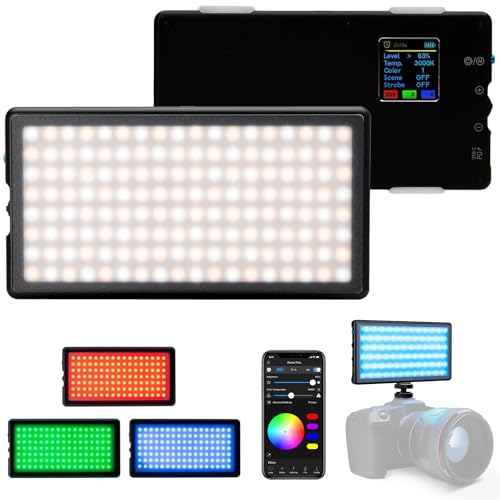
The Lume Cube Panel Pro Kit includes two compact LED panels with adjustable color temperature and brightness. Each panel is battery-powered and can run for over an hour on a full charge. The kit comes with a carry case and mounting hardware.
Size 5.5 x 3.5 inchesColor Temp 3000K-6000KBattery Built-in rechargeableRuntime 60+ minutes
- Portable and battery-powered
- Adjustable color temperature
- Includes carry case
- Lower output than AC lights
- Short runtime on high
Fovitec 2-Light Fluorescent Kit
★★★★★ 4.3 / 5 Best for photography
The Fovitec kit includes two fluorescent softboxes with 45W bulbs each. It provides even, diffused light ideal for portraits and product shots. The kit includes stands, bulbs, and a carrying bag.
Bulb Type FluorescentWattage 45W per lightColor Temp 5500KIncluded 2 softboxes, stands, bulbs
- Very soft light
- Even coverage
- Great for portraits
- Bulbs can be fragile
- No dimming control
Best for: Best for photography
Elgato Key Light Air Kit
★★★★★ 4.7 / 5 Best for streaming
The Elgato Key Light Air is a compact LED panel designed for desk use. It offers adjustable brightness and color temperature via the Elgato app. The kit includes a desk clamp and USB power.
Size Compact panelColor Temp 2900K-7000KControl Elgato appMount Desk clamp
- Easy app control
- Compact for small spaces
- USB powered
- Lower output than larger panels
- Requires app for full control
Best for: Best for streaming
We compared specifications like wattage, CRI, and included accessories. Owner feedback and use-case fit also shaped our picks.
What to Look For in a Studio Lighting Kit
Start with output, measured in watts or LED count. Higher wattage means brighter light, but it also draws more power. Check the color rendering index, or CRI. A CRI of 90 or above ensures accurate colors. Consider the color temperature range. Adjustable temperature gives flexibility for mixed lighting. Look at the included accessories. Stands, diffusers, and bags add value. Finally, think about control options. Remote or app control simplifies adjustments.
Choosing Between Continuous and Flash Lighting
Continuous lights stay on, letting you see the effect in real time. They work well for video and beginners. Flash lights burst briefly, freezing motion and offering more power. They are better for action shots and professional portraits. Continuous kits are usually cheaper and easier to use. Flash kits require more learning but offer more creative control. Your subject and style should guide the choice.
Matching the Kit to Your Space and Subject
Measure your room before buying. Large softboxes need space to spread out. Compact panels fit on desks or small tables. For product photography, small lights with softboxes work well. For full-body portraits, you need taller stands and more power. Think about your typical subject. A kit that suits a person may not suit a product. Choose accordingly.
Understanding Light Modifiers and Accessories
Softboxes diffuse light, creating softer shadows. Umbrellas bounce light for a wider spread. Grids focus light and reduce spill. Most kits include basic modifiers. Check the mount type. Bowens mounts are common and offer many options. Some kits use proprietary mounts, limiting choices. Consider what modifiers you might add later. A standard mount gives flexibility.
Questions people ask
What is the best studio lighting kit for beginners?
The Neewer 660 LED Video Light Kit is a great start. It offers two lights and stands at a low cost. The controls are simple, and the included diffusers help soften light.
Which is better, LED or fluorescent studio lights?
LED lights are more energy-efficient and last longer. They also offer adjustable color temperature. Fluorescent lights are cheaper but produce softer light. For most users, LED is the better choice.
How many lights do I need for a home studio?
A basic setup uses three lights: key, fill, and backlight. Start with two lights if budget is tight. You can use reflectors to fill shadows. Many kits include two lights, which is enough for many shoots.
Can I use studio lights for video?
Yes, continuous lights work well for video. Look for kits with high CRI and adjustable brightness. LED panels and COB lights are popular for video. Avoid flicker by choosing quality lights.
What is CRI and why does it matter?
CRI measures color accuracy on a scale from 0 to 100. A CRI of 90 or higher ensures colors look natural. Lower CRI can make skin tones appear off. For professional work, aim for CRI 95 or above.
Are battery-powered studio lights worth it?
Battery-powered lights offer portability and flexibility. They are ideal for location shoots. However, they have lower output and shorter runtimes. If you shoot mostly in a studio, AC-powered lights are better.
How do I set up a three-point lighting system?
Place the key light at a 45-degree angle to the subject. Put the fill light on the opposite side at a lower intensity. Position the backlight behind the subject to separate them from the background. Adjust distances to balance shadows.
Can I use studio lights for product photography?
Yes, continuous lights work well for products. Use softboxes to create even lighting. Position lights at angles to reduce reflections. A light tent can help for small items.
The bottom lineSo which one?
The GVM 800D-RGB kit offers the most versatility with color control. For most budgets, the Neewer 660 kit provides excellent value. Choose based on your primary use, space, and need for portability.