Digital Cameras
Best Mirrorless Cameras for Every Photographer
7 picks compared
6 min read
ProductPickly is reader-supported. When you buy through links on our site, we may earn an affiliate commission at no extra cost to you. It never changes our picks.
The short answerThe Sony A7 IV leads for full-frame versatility, the Fujifilm X-T5 excels for stills and classic controls, and the Canon EOS R6 Mark II is the hybrid champion. Each suits different needs.
?How we pickedWe compare published specifications, safety certifications and thousands of verified owner reviews, and we do not physically test every unit. Read the full process in our review methodology.
Sony A7 IV
★★★★★ 4.8 / 5 Best overall full-frame
The Sony A7 IV pairs a 33MP full-frame sensor with robust autofocus. It shoots 4K60 video with 10-bit color. Owners praise its dynamic range and reliable eye tracking.
Sensor 33MP full-frame BSI CMOSVideo 4K60 10-bitAutofocus 759-point phase detectWeight 1.46 lb (body only)
- Excellent autofocus
- Great image quality
- Strong video features
- Expensive
- Large file sizes
Best for: Best overall full-frame
Fujifilm X-T5
★★★★★ 4.8 / 5 Best for stills and classic controls
The Fujifilm X-T5 offers a 40MP APS-C sensor and dedicated dials. It delivers film simulations and high-resolution stills. Video is capable but not its primary focus.
Sensor 40MP APS-C X-Trans CMOSVideo 6.2K30 10-bitAutofocus 425-point phase detectWeight 1.16 lb (body only)
- High resolution
- Tactile controls
- Great color science
- No IBIS in all modes
- Video limitations
Best for: Best for stills and classic controls
Canon EOS R6 Mark II
★★★★★ 4.8 / 5 Best hybrid for photo and video
The Canon EOS R6 Mark II combines a 24MP full-frame sensor with 4K60 video. It features excellent autofocus and in-body stabilization. Owners love its low-light performance.
Sensor 24.2MP full-frame CMOSVideo 4K60 10-bitAutofocus Dual Pixel CMOS AF IIWeight 1.38 lb (body only)
- Top-tier autofocus
- Great low-light
- Compact for full-frame
- Lower resolution
- Battery life
Best for: Best hybrid for photo and video
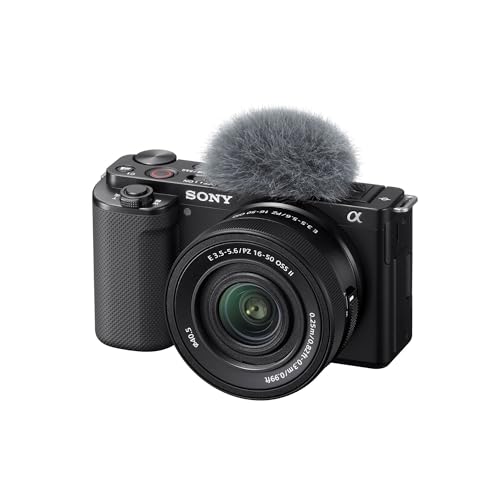
Sony ZV-E10
★★★★★ 4.7 / 5 Best budget vlogging camera
The Sony ZV-E10 is an APS-C camera designed for content creators. It has a flip-out screen and built-in directional mic. Owners appreciate its compact size and easy operation.
Sensor 24.2MP APS-C CMOSVideo 4K30Autofocus 425-point phase detectWeight 0.61 lb (body only)
- Compact
- Great for vlogging
- Good autofocus
- No viewfinder
- Plastic build
Best for: Best budget vlogging camera
Olympus OM-D E-M10 Mark IV
★★★★★ 4.6 / 5 Best budget beginner camera
The Olympus OM-D E-M10 Mark IV is a Micro Four Thirds camera with a 20MP sensor. It offers in-body stabilization and a tilting touchscreen. Beginners find it intuitive and lightweight.
Sensor 20.3MP Four Thirds CMOSVideo 4K30Autofocus 121-point contrast detectWeight 0.88 lb (body only)
- In-body stabilization
- Compact
- Easy to use
- Smaller sensor
- Autofocus not as fast
Best for: Best budget beginner camera
Panasonic Lumix GH6
★★★★★ 4.7 / 5 Best for professional video
The Panasonic Lumix GH6 is a Micro Four Thirds camera built for video. It records 5.7K at 60p and offers unlimited recording. Videographers value its extensive codecs and tools.
Sensor 25.2MP Four Thirds CMOSVideo 5.7K60 10-bitAutofocus Contrast-detect with DFDWeight 1.48 lb (body only)
- Outstanding video quality
- Unlimited recording
- Good ergonomics
- Autofocus can hunt
- Large for M43
Best for: Best for professional video
Nikon Z fc
★★★★★ 4.7 / 5 Best for style and travel
The Nikon Z fc combines retro design with modern APS-C performance. It has a 20.9MP sensor and a vari-angle touchscreen. Travelers enjoy its lightweight build and classic look.
Sensor 20.9MP APS-C CMOSVideo 4K30Autofocus 209-point hybridWeight 1.06 lb (body only)
- Stylish design
- Compact
- Good image quality
- No IBIS
- Limited lens selection
Best for: Best for style and travel
We compared specifications, owner feedback, and use-case fit. Focus on sensor size, autofocus, video specs, and lens ecosystem.
Sensor size and resolution
Sensor size affects image quality and low-light performance. Full-frame sensors excel in dynamic range and bokeh. APS-C sensors offer a balance of quality and size. Micro Four Thirds is smaller but more portable. Resolution matters for cropping, but higher isn't always better. Consider what you'll shoot most.
Autofocus and burst speed
Modern mirrorless cameras have excellent autofocus. Look for eye detection for people and animals. Burst speed is crucial for action and wildlife. Check continuous shooting rates and buffer depth. Owners report that reliable autofocus is a top priority. Test it in stores if possible.
Video capabilities
Video specs vary widely among mirrorless cameras. Check resolution, frame rate, and bit depth. 4K60 is common, but some offer 6K or 8K. Consider log profiles for color grading. In-body stabilization helps handheld shooting. Reviewers note that overheating can be an issue, so check for cooling.
Lens ecosystem and ergonomics
The lens system determines your future options. Sony and Canon have extensive full-frame lineups. Fujifilm and Nikon have strong APS-C selections. Micro Four Thirds offers many compact lenses. Handle the camera to check grip and button layout. Weight matters if you carry it all day.
Questions people ask
What is the best mirrorless camera for beginners?
The Olympus OM-D E-M10 Mark IV is a top choice. It offers easy controls and in-body stabilization. The Sony ZV-E10 is also beginner-friendly for vloggers.
Is a full-frame mirrorless camera worth it?
Full-frame cameras offer better low-light performance and depth of field. They are larger and costlier. If you shoot professionally or in low light, it's worth the investment.
Which mirrorless camera is best for video?
The Panasonic Lumix GH6 is excellent for professional video. The Sony A7 IV and Canon EOS R6 Mark II are also strong hybrids.
What is the difference between APS-C and full-frame?
Full-frame sensors are larger, giving better low-light and shallower depth of field. APS-C sensors are smaller and more affordable. Both produce high-quality images.
How long do mirrorless camera batteries last?
Battery life varies by model. Mirrorless cameras use more power than DSLRs. Expect 300 to 400 shots per charge. Carry spares for long shoots.
Can I use DSLR lenses on a mirrorless camera?
Yes, with an adapter. Many brands offer adapters for their DSLR lenses. Autofocus may be slower, but it works. Some adapters are expensive.
What is IBIS and why is it important?
IBIS stands for in-body image stabilization. It reduces camera shake for sharper images and smoother video. It's helpful in low light and with unstabilized lenses.
Which mirrorless camera has the best autofocus?
Sony and Canon lead in autofocus technology. The Sony A7 IV and Canon EOS R6 Mark II have top-tier eye tracking. Fujifilm's latest models are also competitive.
The bottom lineSo which one?
The best mirrorless camera depends on your needs. The Sony A7 IV is the best all-rounder for most. For video, the Panasonic GH6 stands out. Beginners should consider the Olympus OM-D E-M10 Mark IV.