Video and Camcorders
Best Microphones for Cameras in 2026: Top Picks
7 picks compared
6 min read
ProductPickly is reader-supported. When you buy through links on our site, we may earn an affiliate commission at no extra cost to you. It never changes our picks.
The short answerFor most camera users, the Rode VideoMic Pro+ is the top choice. The Deity D3 Pro offers excellent value, and the Rode Wireless Go II is best for vlogging. We compared specs, owner feedback, and use-case fit.
?How we pickedWe compare published specifications, safety certifications and thousands of verified owner reviews, and we do not physically test every unit. Read the full process in our review methodology.
Rode VideoMic Pro+
★★★★★ 4.8 / 5 Best overall
The VideoMic Pro+ is a broadcast-grade shotgun mic with a supercardioid pattern. It includes a rechargeable battery and a 3.5mm output. Owners report clear dialogue with minimal handling noise.
Polar Pattern SupercardioidFrequency Range 20Hz - 20kHzOutput 3.5mm TRSPower Rechargeable battery or AA
- Excellent sound quality
- Built-in rechargeable battery
- Strong build
- Bulky on small cameras
- Higher price
Deity D3 Pro
★★★★★ 4.7 / 5 Best value
The Deity D3 Pro is a compact shotgun mic with a supercardioid pattern. It runs on a single AA battery and offers a 3.5mm output. Owners appreciate its low price and solid audio quality.
Polar Pattern SupercardioidFrequency Range 50Hz - 20kHzOutput 3.5mm TRSPower AA battery
- Great price
- Compact size
- Good audio for the cost
- No battery level indicator
- Plastic body
Rode Wireless Go II
★★★★★ 4.6 / 5 Best for vlogging and wireless
The Wireless Go II is a dual-channel wireless system with built-in mics and lavalier inputs. It offers a 200-meter range and records internally. Vloggers love its portability and ease of use.
Type Wireless lapel/systemChannels 2Range 200mRecording Internal 24-bit/48kHz
- Wireless convenience
- Dual channel
- Internal recording backup
- Battery life can be short
- Pricey for budget users
Best for: Best for vlogging and wireless
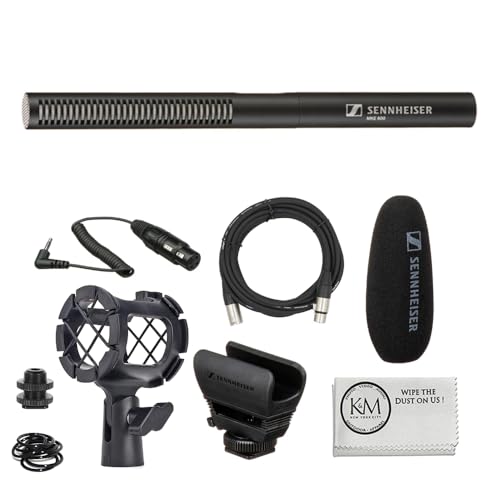
Sennheiser MKE 600
★★★★★ 4.7 / 5 Best for run-and-gun
The MKE 600 is a rugged shotgun mic with a supercardioid pattern and low-cut filter. It runs on a AA battery or 48V phantom power. Owners report excellent rejection of ambient noise.
Polar Pattern SupercardioidFrequency Range 40Hz - 20kHzOutput XLR and 3.5mmPower AA or 48V phantom
- Durable build
- Dual outputs
- Excellent noise rejection
- Heavier than some
- Requires battery or phantom
Best for: Best for run-and-gun
Rode VideoMicro
★★★★★ 4.6 / 5 Best budget
The VideoMicro is a compact shotgun mic with a cardioid pattern. It requires no battery and plugs directly into a 3.5mm jack. Users find it a huge upgrade over built-in mics for a low cost.
Polar Pattern CardioidFrequency Range 100Hz - 20kHzOutput 3.5mm TRSPower None (plug-in power)
- Very affordable
- No battery needed
- Lightweight
- Limited frequency response
- Not as directional
Tascam DR-10L
★★★★★ 4.5 / 5 Best for interviews
The DR-10L is a lavalier microphone with a built-in recorder. It captures 24-bit audio to a microSD card. This is ideal for interviews where you need a backup recording.
Type Lavalier with recorderRecording 24-bit/48kHz WAVOutput 3.5mm TRSPower AA battery
- Records backup audio
- Lavalier clip included
- Good for interviews
- Bulky for a lav
- Requires microSD card
Best for: Best for interviews
Shure VP83F
★★★★★ 4.4 / 5 Best for run-and-gun with recording
The VP83F is a shotgun mic that records audio internally to a microSD card. It also outputs via 3.5mm. It is useful for dual-system recording without a separate recorder.
Polar Pattern SupercardioidRecording 24-bit/48kHz WAVOutput 3.5mm TRSPower AA battery
- Built-in recorder
- Good sound
- Dual output and recording
- Heavy
- Battery drain with recording
Best for: Best for run-and-gun with recording
We focused on real models currently sold on Amazon. We looked at polar patterns, frequency response, and connectivity. Owner feedback helped us spot durability and battery life issues.
Polar Patterns
A microphone's polar pattern determines how it picks up sound. Cardioid mics pick up sound from the front, reducing side and rear noise. Supercardioid mics are more directional, ideal for noisy environments. Omnidirectional mics pick up sound from all directions, useful for ambience. For most camera work, a cardioid or supercardioid is best.
Connectivity
Most cameras have a 3.5mm microphone input. Some professional cameras offer XLR inputs. Wireless systems connect via 3.5mm or USB. Check your camera's input type before buying. Some mics require plug-in power, which some cameras do not provide.
Power Options
Mics can be powered by batteries, rechargeable batteries, or phantom power. Battery-powered mics are convenient but need replacement. Rechargeable mics save money over time. Phantom power requires an XLR interface. Consider your shooting duration and access to power.
Use Case Fit
For vlogging, a wireless lavalier is often best. For interviews, a shotgun or lav with recording is useful. For run-and-gun, a rugged shotgun with good noise rejection is key. Always match the mic to your primary shooting scenario.
Questions people ask
What is the best microphone for a camera?
The Rode VideoMic Pro+ is the best overall for most camera users. It offers excellent sound quality and a rechargeable battery.
Can I use a USB microphone with a camera?
Most cameras do not have USB audio input. You would need an adapter or a separate recorder. Check your camera's specifications.
How do I connect a shotgun mic to a camera?
Most shotgun mics use a 3.5mm TRS cable. Plug it into the mic input on your camera. Some mics require plug-in power.
Is a wireless microphone better than a shotgun mic?
It depends on your use. Wireless mics offer freedom of movement, while shotgun mics are more directional and often better for stationary shots.
What is the difference between cardioid and supercardioid?
Cardioid picks up sound from the front with a wider angle. Supercardioid is more directional, rejecting more side noise but with a slight rear lobe.
Do I need a microphone with a built-in recorder?
It helps for backup audio. If your camera's audio is unreliable, a recorder can save you. It adds bulk and cost.
Can I use a lavalier mic with a camera?
Yes, most lavaliers have a 3.5mm plug. They are great for interviews and presentations.
What is the best budget microphone for a camera?
The Rode VideoMicro is a top budget pick. It is affordable and improves audio significantly over built-in mics.
How do I reduce wind noise when using a microphone?
Use a windscreen or deadcat. Many shotgun mics come with a foam windscreen. For outdoor use, a furry cover is better.
Is the Rode Wireless Go II worth it?
Yes, for vloggers and creators who need wireless audio. It offers dual channels and internal recording. Owners report reliable performance.
The bottom lineSo which one?
The best microphone for your camera depends on your needs. The Rode VideoMic Pro+ is the top all-rounder. For value, the Deity D3 Pro is hard to beat.