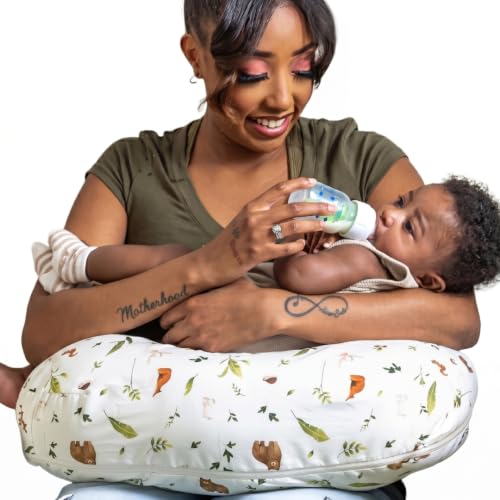
Choosing a nursing pillow can feel overwhelming with so many shapes, fills, and features. Our editorial team compared specifications, buyer feedback, and key decision factors to help you find the right support for you and your baby. This guide breaks down the essential factors: shape, firmness, fill material, washability, and versatility, plus tips for different body types and feeding positions.
Shape: C-Shape vs U-Shape
The shape of a nursing pillow determines how it wraps around your body and where it provides support. Two main shapes dominate the market: C-shape and U-shape.
C-Shape Nursing Pillows
C-shape pillows curve around your waist like a crescent moon. They are popular for breastfeeding because they bring the baby close to your chest while leaving your hands free. The open ends allow you to adjust the pillow forward or backward to change the baby's angle. Many C-shape pillows have a slight rise at the front to support the baby's head, which can be helpful for newborns.
However, C-shape pillows may not stay in place if you shift positions. Some have straps or buckles to secure them, but not all. They also provide less back support than U-shapes because they do not wrap behind your back.
U-Shape Nursing Pillows
U-shape pillows form a full loop, going around your back and under both arms. They are often called pregnancy pillows because they also work well for sleeping and tummy time. For nursing, U-shapes offer more even support and can be used for twin feeding, as each arm rests on a side. They are also useful for bottle feeding because they create a stable platform.
The downside is that U-shapes can be bulky and may not fit well if you are petite or have a short torso. They also take up more space on a couch or bed. Some U-shapes have adjustable snaps that let you convert them to a C-shape, giving you versatility.
Which shape is best? It depends on your feeding style. If you often nurse in a chair and want portability, a C-shape is lighter. If you need extra back support or plan to feed in bed, a U-shape may be worth the bulk.
Firmness and Support
Firmness affects both comfort and safety. A pillow that is too soft may let the baby sink, which can strain their neck and make latching difficult. A pillow that is too firm may feel like a rock against your arms and the baby's head.
Look for a medium-firm fill that holds its shape but has some give. When you press your hand into the pillow, it should spring back slowly. Many parents describe the ideal as similar to a firm couch cushion. Some pillows have adjustable fills, like removable foam beads, so you can add or remove stuffing to customize firmness.
Firmness also relates to the pillow's height. A pillow that is too low may cause you to hunch, while one that is too high can push the baby up toward your chin. The right height depends on your torso length. A good rule: when you sit with the pillow on your lap, the baby's nose should be level with your nipple (for breastfeeding) or with the bottle (for bottle feeding).
If you have a C-section, you may want a softer pillow that does not press on the incision. Some pillows have a contoured cutout in the middle, which relieves pressure on the belly. Check product images for this feature if it matters to you.
Fill Material and Weight
The fill material determines the pillow's weight, support, and how it holds up to washing. Common fills include polyester fiberfill, foam beads, buckwheat hulls, and organic cotton.
- Polyester fiberfill: Lightweight and plush, but may flatten over time. Often machine washable if the cover is removable.
- Foam beads: Provide a moldable, beanbag-like feel. They conform to your body and the baby, but can shift if the pillow is not well-segmented. Some bead-filled pillows have a removable inner liner to keep beads in place.
- Buckwheat hulls: Firm and supportive, but heavy and noisy. They are not washable, so you need a waterproof cover. They also have a distinct earthy smell.
- Organic cotton or wool: Natural and breathable, but often less structured. They may require more fluffing.
Weight is a practical factor. A heavy pillow is harder to move from room to room or take on trips. Lighter pillows are convenient but may not stay put. Consider how you will use the pillow: if you plan to travel, a lightweight C-shape with a carrying strap is ideal. If you will keep it at home, weight matters less.
Also check if the fill is hypoallergenic. If you or your baby have allergies, choose a fill that is dust-mite resistant, such as foam beads or buckwheat hulls with a tight weave cover.
Washability and Hygiene
Babies spit up, leak, and have diaper blowouts. A nursing pillow will get dirty, so washability is non-negotiable. Look for a pillow with a removable, machine-washable cover. Ideally, the cover should be made of soft cotton or a cotton blend that can withstand frequent washing.
Some pillows have a waterproof inner liner that protects the fill. This is especially useful if you plan to use the pillow for tummy time or as a support for a bottle-fed baby. If the fill itself is washable, check the care instructions. Foam beads are often not machine washable, but you can spot clean them.
Consider buying an extra cover so you can rotate them while one is in the wash. Also check if the cover is easy to remove and replace. Zippers that snag or small openings can be frustrating. Look for a wide zipper or Velcro closure.
For hygiene, wash the pillow cover weekly if you use it daily. If the pillow has a removable inner, air it out regularly. Some parents use a pillowcase over the nursing pillow, which is easier to change daily.
Versatility Beyond Feeding
A nursing pillow can serve many purposes beyond breastfeeding. The best ones are versatile, earning their place in your nursery.
- Bottle feeding: Use the pillow to support the baby while you hold the bottle, reducing arm fatigue.
- Tummy time: Place the baby on their tummy over the pillow to help strengthen neck and shoulder muscles. The slight incline makes it easier for them to lift their head.
- Baby lounger: Some pillows are firm enough to act as a safe lounger for supervised awake time. Always follow safe sleep guidelines.
- Postpartum support: Use the pillow as a backrest while sitting, or to support your C-section incision when lying on your side.
- Pregnancy support: A U-shape pillow can be used during pregnancy to support your belly and back.
Check if the pillow has a multi-purpose design, such as adjustable snaps that convert C to U, or a removable insert for different firmness levels. These features add value but may also add cost. Decide which functions you will actually use.
Tips for Different Body Types and Positions
Your body type and preferred feeding positions influence which pillow will work best.
Petite or Short Torso
If you are petite, a large U-shape may overwhelm you. Look for a C-shape with a lower profile or an adjustable height. Some pillows have a strap that lets you cinch them tighter, bringing the baby closer. Avoid thick pillows that push the baby too high.
Plus-Size or Larger Bust
For plus-size parents, a longer C-shape that wraps further around your waist provides better support. Some pillows are specifically designed for larger bodies, with extra length and a wider surface. A U-shape may also work if it is long enough to go around your back without gaps. Check the dimensions before buying.
Twins or Multiples
Feeding twins requires a wide, stable surface. A U-shape pillow is often recommended because it allows you to place one baby on each side. Some twin nursing pillows have a larger surface and a firmer fill to support two babies at once. You can also use two C-shape pillows, but a purpose-built twin pillow is simpler.
Feeding Positions
Different positions call for different pillow shapes:
- Cradle hold: A C-shape pillow works well because it curves around your waist and supports the baby's head in the crook of your arm.
- Cross-cradle hold: Same as cradle, but you use the opposite arm to support the baby's head. A C-shape with a slight rise at the front can help.
- Football hold: This position requires the pillow to be placed along your side, not in front. A C-shape that you can rotate works, but some parents prefer a straight, narrow pillow or a specially designed football hold pillow.
- Side-lying: For side-lying feeding in bed, a U-shape pillow can support your back and the baby. You may also use a regular pillow behind your back and a small one under the baby.
Remember that you may switch positions as your baby grows. A pillow that works for a newborn may not suit a 6-month-old. Choose one that can be adjusted or has enough surface area to accommodate growth.
Final Checklist
Before you buy, run through this checklist to ensure you pick the right nursing pillow for your needs.
- Shape: C-shape for portability and easy positioning, U-shape for back support and twin feeding, or a convertible design.
- Firmness: Medium-firm that holds shape but has some give. Test if possible by reading reviews for comments on firmness.
- Height: The pillow should bring the baby to the correct height without hunching. Measure your torso if needed.
- Fill material: Choose a fill that is supportive, lightweight enough for your use, and hypoallergenic if needed.
- Washability: Removable, machine-washable cover, and ideally a waterproof inner liner.
- Versatility: Does it work for bottle feeding, tummy time, or postpartum support? Do you need those functions?
- Body type: Check dimensions for petite, plus-size, or twin use. Read reviews from parents with similar body types.
- Position compatibility: Will it support your preferred feeding positions? Consider if you might switch positions.
- Cleaning ease: Look for a wide zipper, easy cover removal, and clear care instructions.
- Safety: Ensure the pillow has no loose parts, is free from harmful chemicals, and meets safety standards.
Once you have narrowed down your options, check the current price on Amazon and read recent buyer reviews for real-world feedback. A nursing pillow is an investment in your comfort and your baby's feeding success, so take your time to choose wisely.