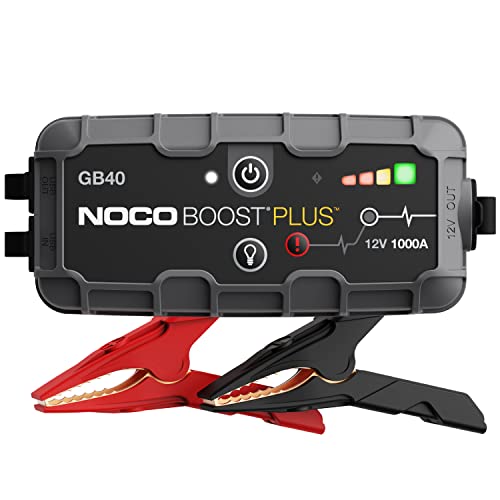
A dead battery can strand you anywhere. A jump starter is a portable battery pack that can revive your vehicle without needing another car. But with so many models on the market, choosing the right one requires understanding key specs like peak amps, battery chemistry, and safety features. Our editorial team compared specifications, buyer feedback, and key decision factors to create this complete buying guide. Whether you drive a compact car or a large diesel truck, this guide will help you match the jump starter to your vehicle.
Understanding Power Ratings: Peak Amps vs Cranking Amps
The most important specification is power output. Jump starters list two numbers: peak amps and cranking amps (or cold cranking amps). Peak amps represent a very short burst of maximum current, often used in marketing to make a device seem more powerful. Cranking amps (CA) or cold cranking amps (CCA) indicate the sustained current the unit can deliver for a few seconds to actually start an engine. For reliable performance, always compare cranking amps rather than peak amps. A general rule: for a 4-cylinder gasoline engine, look for at least 400 cranking amps; for a V6 or V8, 600 to 800 cranking amps; for a diesel engine, you may need 1000 or more cranking amps. Check your vehicle's battery specifications to find its CCA rating, and choose a jump starter that meets or exceeds that number. For example, a typical sedan battery might have a CCA of 500, so a jump starter with 600 cranking amps would provide a comfortable margin. For a heavy-duty diesel pickup, a jump starter with 1200 cranking amps is advisable. Remember that cold temperatures reduce battery performance, so if you live in a cold climate, add 20-30% to your CCA requirement.
Battery Type: LiFePO4 vs Lithium-Ion
Jump starters use either lithium-ion (Li-ion) or lithium iron phosphate (LiFePO4) batteries. LiFePO4 is a subtype of lithium-ion chemistry but with distinct advantages. LiFePO4 batteries are more thermally stable, meaning they are less likely to overheat or catch fire. They also have a longer cycle life (typically 2000+ cycles versus 500-1000 for standard Li-ion) and can be stored for longer periods without significant capacity loss. The trade-off is that LiFePO4 units are often slightly heavier and more expensive. Standard lithium-ion jump starters are lighter and cheaper, but they may degrade faster and pose a higher safety risk if damaged. For most users, especially those who want a device that lasts years, LiFePO4 is the better choice. However, if weight and cost are top priorities, a quality lithium-ion model with proper safety certifications can still be a good option. For instance, a compact lithium-ion jump starter might weigh only 1.5 pounds and fit easily in a glove box, while a LiFePO4 unit of similar capacity could weigh 2.5 pounds. Consider your storage space and how often you expect to use the device.
Safety Features and Protection
Safety is critical when connecting a jump starter to your vehicle's electrical system. The most important feature is reverse polarity protection, which prevents damage if you accidentally connect the clamps to the wrong terminals. Look for units that audibly or visually alert you to incorrect connections. Other essential protections include overcurrent protection (limits current draw), short circuit protection (shuts off if a short is detected), overcharge protection, and over-temperature protection. Spark-proof technology is also valuable; it prevents sparks when connecting the clamps, reducing the risk of igniting hydrogen gas from the battery. Many high-quality jump starters now include smart clamps with built-in protection circuits. Always verify that the unit meets safety standards such as UL or CE certification. For example, a jump starter with smart clamps will not deliver power until it detects a proper connection, eliminating the risk of sparking. Additionally, some models have an IP rating for dust and water resistance, which is useful if you need to use the device in rain or muddy conditions.
Portability and Extra Features
A jump starter should be compact enough to store in your glove compartment or trunk. Consider the dimensions and weight: typical units range from 1 to 5 pounds. Larger capacity units (higher amp hours) are heavier but can also jump-start bigger engines and provide more backup power. Many jump starters double as portable power banks with USB ports for charging phones, tablets, or other devices. Some include 12V DC outlets, LED flashlights with strobe or SOS modes, and even air compressors for inflating tires. Think about your specific needs: if you frequently travel in remote areas, extra features like a bright flashlight and USB charging can be lifesavers. However, don't sacrifice core power and safety for extras. Prioritize a unit that meets your vehicle's cranking amp requirements and includes robust safety protections, then consider additional features as bonuses. For instance, a jump starter with a 400-lumen LED flashlight and a built-in air compressor can help you change a tire or signal for help at night. USB-C fast charging is another convenient feature, allowing you to recharge the jump starter quickly from a wall outlet or car charger.
Matching the Jump Starter to Your Vehicle
To choose the right jump starter, start by identifying your vehicle's engine type and battery specifications. For a small 4-cylinder gasoline car, a unit with 400-600 cranking amps is sufficient. For a V6 or V8 gasoline engine, aim for 600-800 cranking amps. Diesel engines require more power due to higher compression ratios; a small diesel may need 800-1000 cranking amps, while a large diesel truck or RV may require 1200-1500 cranking amps. Also consider the battery's physical size and terminal type. Some jump starters come with adapters for side-post or top-post batteries. If you have a hybrid or electric vehicle, check the manufacturer's recommendations, as some may require a specific type of jump starter or advise against using one. Always read the owner's manual for your vehicle and the jump starter to ensure compatibility. For example, a 2020 Honda Civic with a 2.0L 4-cylinder engine has a battery CCA of about 500, so a jump starter with 600 cranking amps would work well. A 2022 Ford F-250 with a 6.7L diesel may have a CCA of 950, so you would need a jump starter with at least 1000 cranking amps.