Car Amplifiers
Best Car Amplifiers for Subwoofers, Speakers, and Full Systems
7 picks compared
9 min read
ProductPickly is reader-supported. When you buy through links on our site, we may earn an affiliate commission at no extra cost to you. It never changes our picks.
The short answerFor most people the Taramps TS 400x4 is the standout pick, a compact four-channel amp that powers a full set of door and rear speakers and bridges two channels for a modest sub. If your goal is bass, the BOSS R1100M monoblock and the RMS-rated CT Sounds CT-1000.1D are our subwoofer choices, while the Pioneer GM-A6704 is the trusted four-channel and the Pioneer GM-A3702 the simple two-channel for a first upgrade. To run a whole system from one box, the Recoil RED1800.5 five-channel handles speakers and a sub together, and the Taramps TS 1200 is the pick for a more demanding 2 ohm four-channel setup. Choose by channel count, honest RMS power, and whether you want Class D efficiency rather than the biggest advertised watts.
?How we pickedWe compare published specifications, safety certifications and thousands of verified owner reviews, and we do not physically test every unit. Read the full process in our review methodology.
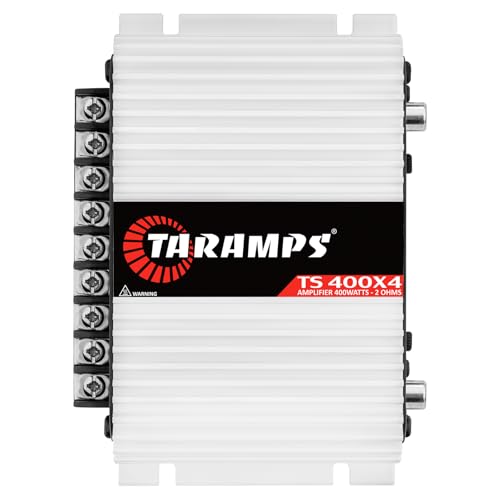
Taramps TS 400x4 4-Channel Full Range Amplifier
★★★★★ 4.6 / 5 Best overall
This is the amplifier we would reach for first because it does the job most people actually need, driving four full-range channels for door and rear speakers from a chassis small enough to tuck almost anywhere. The Class D design and RCA inputs keep the wiring straightforward, and two of the channels bridge together if you later want to add a modest sub.
Channels 4 channels, full rangeRated power 400 watts RMS (brand rating)Amplifier class Class DGood to know 2 channels bridge, RCA input, compact size
- Four channels cover a full speaker set from one box
- Compact Class D chassis fits tight installs
- Two channels bridge for a modest subwoofer later
- Brand watt ratings run optimistic, so match to real speaker RMS
- No dedicated sub channel out of the box
Best for: powering a full set of door and rear speakers from one compact amp
BOSS Audio Systems R1100M Monoblock Amplifier
★★★★★ 4.3 / 5 Best for subwoofers
A single-channel monoblock built to do one thing, feed a subwoofer, which is exactly how a bass amp should be laid out. It gives you a straightforward way to add low end without touching the amp that runs your speakers, and the one-channel design keeps gain and crossover setup simple for a first sub build.
Channels Monoblock, 1 channelMax power 1100 watts max (brand rating)Best use Dedicated subwoofer dutyGood to know Max figure is peak, not continuous RMS
- Single channel is purpose built for a sub
- Keeps bass power separate from your speaker amp
- Simple controls for a first subwoofer setup
- Advertised max is peak, so plan around a lower real RMS
- Mono only, no help for door speakers
Best for: adding a dedicated subwoofer without disturbing your speaker amp
Pioneer GM-A6704 4-Channel Class AB Amplifier
★★★★★ 4.5 / 5 Best 4-channel
Pioneer is a name that carries some trust, and this bridgeable four-channel is a sensible pick for running front and rear speakers with headroom to spare. It uses a Class AB design rather than Class D, which some listeners prefer for full-range speakers, and it bridges down to fewer channels if you want more power to a pair.
Channels 4 channels, bridgeableMax power 1000 watts max (brand rating)Amplifier class Class ABGood to know Bridges to 2 channels for more per-side power
- Established brand with wide parts support
- Bridgeable layout adds flexibility
- Class AB suits full-range speaker duty
- Class AB runs warmer and larger than Class D
- Max power rating is peak, not continuous
Best for: a trusted four-channel to drive front and rear speakers
CT Sounds CT-1000.1D Compact Monoblock Amplifier
★★★★★ 4.4 / 5 Best compact sub amp
What sets this monoblock apart is that CT Sounds rates it at 1000 watts RMS rather than a peak number, which makes matching a subwoofer far less of a guessing game. The compact Class D chassis runs cool and slots into tight spaces, so it suits a clean single-sub build where honest power figures matter.
Channels Monoblock, 1 channelRated power 1000 watts RMS (brand rating)Amplifier class Class D, compactGood to know RMS-rated, easier to match to a sub
- Rated in RMS, so power matching is clearer
- Compact Class D body fits small spaces
- Runs efficiently and stays cool
- Single channel, subwoofer duty only
- Fewer big-box retail options for support
Best for: a clean single-sub build where an honest RMS rating matters
Recoil RED1800.5 5-Channel Class-D Amplifier
★★★★★ 4.4 / 5 Best full-system amp
A five-channel amp is the tidy way to run a whole system from one box, giving four channels for your speakers and a fifth for a subwoofer. The Class D design keeps it compact for what it does, so it is a strong pick when you want a complete front, rear, and bass setup without stacking two separate amplifiers.
Channels 5 channels (4 plus sub)Max power 1800 watts max (brand rating)Amplifier class Class DGood to know Runs speakers and a sub from one chassis
- Runs a full speaker set and a sub from one box
- Saves space versus two separate amps
- Class D layout keeps size in check
- Max rating is peak, spread across five channels
- One failure point for the whole system
Best for: running a complete speaker and subwoofer system from a single amp
Pioneer GM-A3702 2-Channel Class AB Amplifier
★★★★★ 4.5 / 5 Best 2-channel
Sometimes you only need two channels, and this compact Pioneer is a simple way to power a pair of components or bridge down to feed a single sub. It keeps the install light and the setup easy, which makes it a friendly starting point for a first upgrade over factory speakers.
Channels 2 channels, bridgeableMax power 500 watts max (brand rating)Amplifier class Class ABGood to know Bridges to 1 channel for a single sub
- Simple two-channel layout for a first upgrade
- Bridges to mono for a single subwoofer
- Trusted brand and easy to set up
- Only two channels limits system growth
- Peak power rating, plan for lower RMS
Best for: a first upgrade for a pair of speakers or a single bridged sub
Taramps TS 1200 4-Channel Full Range Amplifier
★★★★★ 4.4 / 5 Best 2-ohm 4-channel
A step up in the Taramps line, this four-channel handles 2 ohm loads and includes a built-in crossover, so it is a flexible option for a more demanding speaker setup. The full-range Class D design keeps it compact, though the brand recommends professional installation, which is fair given the wiring a four-channel at low impedance involves.
Channels 4 channels, full rangeLoad 2 ohm capableAmplifier class Class D with crossoverGood to know Brand suggests professional installation
- Handles 2 ohm loads for more flexible wiring
- Built-in crossover helps tune the system
- Compact Class D chassis for a four-channel
- Brand recommends a pro install
- Watt figures are optimistic, match to real speaker RMS
Best for: a more demanding four-channel setup with 2 ohm wiring and a crossover
A car amplifier boosts the weak signal from your stereo into real power for your speakers or subwoofer, which is why upgrading one is the single biggest step toward louder, cleaner sound in a car. The picks below cover the main jobs people buy an amp for, from a dedicated monoblock for a subwoofer to four and five-channel amps that run a whole system, so you can match the amp to what you actually want to power rather than guessing from a wattage number.
Mono for subwoofers, multi-channel for speakers
The first decision is what the amp is going to drive, because that sets the channel count. A single subwoofer wants a monoblock, a one-channel amp built to deliver strong low-frequency power efficiently, like the BOSS R1100M or the CT Sounds CT-1000.1D. Your door and rear speakers want multiple channels, which is where a four-channel like the Taramps TS 400x4 or Pioneer GM-A6704 fits. If you want both from one box, a five-channel such as the Recoil RED1800.5 gives four speaker channels plus a sub channel. The clean way to think about it is one channel per speaker and a dedicated channel for the sub, then pick the amp whose layout matches that plan with a little room to grow.
Matching RMS power honestly
The most important number on an amplifier is continuous RMS power, and it is usually much lower than the large peak or maximum figure printed on the box. A monoblock advertised at over a thousand watts max may deliver far less continuously, which is why an amp that publishes an RMS rating, like the CT Sounds pick, makes matching easier. The goal is to pair a speaker or sub with an amp whose RMS output sits in the same range as the speaker RMS rating. Under-powering a speaker and then pushing the volume until the signal clips can damage it just as surely as too much power, so honest RMS matching protects your gear better than chasing the biggest advertised watts.
Class D efficiency and size
Amplifier class explains why some amps are tiny and others are bulky. Class D designs are highly efficient, wasting less energy as heat, so they run cooler and fit far more power into a compact chassis, which is why the Taramps, CT Sounds, and Recoil picks here use it and why almost every modern subwoofer amp is Class D. Class AB, used by the Pioneer amps, is an older approach that some listeners like for full-range speakers, but it runs warmer and is larger for the same output. For a sub, Class D is the sensible default because efficiency matters most at high power; for speakers, either class can sound good, so let size and heat guide the choice as much as sound.
Wiring and install basics
An amplifier is only as safe as its wiring, and this is the step people most often underestimate. The amp draws current directly from the battery, so it needs a correctly sized power cable with an inline fuse mounted near the battery, a clean and solid ground connection, and a remote turn-on wire so it powers up with the stereo. A matched wiring kit supplies those parts in the right gauge for the amp draw. Set the gain by ear at a sensible level rather than maxing it, since gain is a signal-matching control and not a volume knob. If a low-impedance four-channel like the Taramps TS 1200 is on your list, take the brand advice about professional installation seriously, because getting the wiring and grounding right is what keeps the system reliable and safe.
Questions people ask
What does a car amplifier actually do?
A car amplifier takes the low-level signal from your head unit and boosts it to a level strong enough to drive speakers or a subwoofer properly. Factory stereos put out only a small amount of clean power, so at higher volumes the sound distorts and thins out. An outboard amp gives your speakers the current they need to play louder, cleaner, and with more control over the bass.
How many channels do I need?
Count what you want to power. A monoblock is a single channel built for a subwoofer, a two-channel runs a pair of speakers or bridges to one sub, and a four-channel drives front and rear speakers. A five-channel does both, four speaker channels plus a sub channel. Pick the channel count that matches the speakers and sub you plan to run, with a little room to grow.
Should I match amplifier power to my speakers?
Yes, and the number that matters is continuous RMS power, not the big peak figure on the box. Aim to give a speaker or sub an amp whose RMS output is in the same range as the speaker's RMS rating. Too little power pushed hard can clip and damage speakers just as easily as too much, so matching sensible RMS numbers is safer than chasing the largest advertised watts.
Why are the advertised watt numbers so high?
Many amplifiers are marketed with a peak or maximum wattage that the amp can only touch for an instant, not the power it can hold continuously. Continuous RMS power is usually a good deal lower. Some brands in this guide, like CT Sounds, publish an RMS figure, which is far more useful for matching. When you only see a max number, assume the real working power is meaningfully less.
What is the difference between Class D and Class AB?
Class D amplifiers are highly efficient, so they run cooler and pack more power into a smaller chassis, which is why most modern subwoofer and compact amps use the design. Class AB is an older approach that some listeners prefer for full-range speakers, but it runs warmer and tends to be larger for the same power. For subs, Class D is the practical default; for speakers, either can sound good.
Do I need an amp wiring kit?
In almost every case, yes. An amplifier draws current straight from the battery, so it needs a correctly sized power wire with an inline fuse near the battery, a solid ground, and a remote turn-on wire from the head unit. A matched wiring kit bundles those parts in the right gauge for the amp's draw, which is far safer than piecing together undersized cable.
Can one amplifier power both speakers and a subwoofer?
It can, and that is exactly what a five-channel amp like the Recoil pick is for, with four channels for speakers and a fifth for a sub. A four-channel with two bridgeable channels can also run speakers and a modest sub. If you want strong, dedicated bass, though, many people prefer a separate monoblock for the subwoofer so each amp does one job well.
How did we choose the amplifiers in this guide?
We compared channel count, amplifier class, how each brand rates its power, and the job each amp is built for, then matched them to real needs like subwoofer duty, full speaker sets, compact installs, and complete systems. Every product shown is a real listing, and these are our chosen picks based on that comparison rather than lab measurements of our own.
The bottom lineSo which one?
The Taramps TS 400x4 is our top choice for the widest range of buyers, a compact four-channel that runs a full speaker set and bridges for a modest sub, with the BOSS R1100M and CT Sounds CT-1000.1D leading when a dedicated subwoofer is the goal. Let channel count, honest RMS power, and Class D efficiency lead the decision rather than the largest number on the box, and budget for a properly sized wiring kit so the amp you choose installs safely and runs reliably.