A cabin air filter is the small pleated panel that cleans the air coming through your car's heating and air-conditioning vents. When it is fresh it helps keep dust, pollen, and road grime out of the cabin, and a carbon version can cut down on odors too. When it is clogged you get weaker airflow, foggier windows, and sometimes a musty smell. This roundup pulls together honest, editorial picks across the most common filter types so you can match one to your vehicle.
One thing to understand up front: cabin air filters are vehicle-specific. The part numbers below map to different cars, so the "best" filter is really the best one that actually fits your make, model, and year. We have organized the picks by what each one is good at, HEPA-style particle capture, activated-carbon odor control, value, and older-vehicle coverage, so you can find the right category first and then confirm the exact part number.
How we chose these cabin air filters
This is an editorial roundup built from current Amazon listings, not a hands-on lab review. We did not install, run, or measure these filters ourselves, so any HEPA, activated-carbon, layer-count, or filtration-percentage figures you see are claims taken straight from the manufacturer listings. What we did was compare the filters on media type, stated construction, the breadth of their vehicle cross-references, and how clearly each one signals what job it is built for. We then spread the picks so that whatever your main need, cleaner air for allergies, fewer odors, or a filter for an older car, there is a sensible option to start from.
Our top picks: cabin air filter
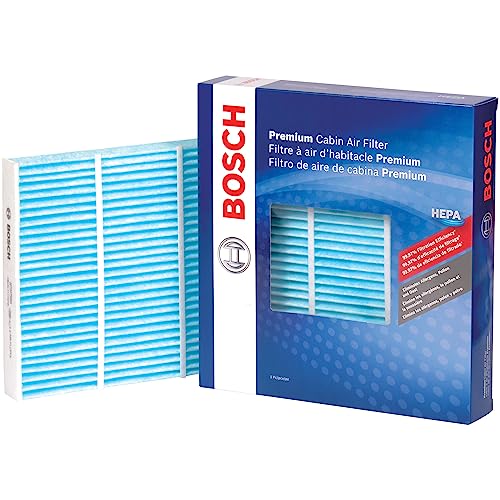
The Bosch 6055C is our well-rounded top pick because its three-layer HEPA-style design, per the listing, aims to handle both fine particles and odor. The 6091C and 6092C are the same build in different fitments, so one of the three may match your vehicle even if another does not. For odor-focused drivers, the Spearhead Odor Defense BE-285 leads with an activated-carbon layer, while the Puroma CP285 and CARORY CF285 offer activated-carbon filtration across a wide set of Toyota, Lexus, and other popular models. The ECOGARD XC35479 rounds things out for older Toyota and Lexus vehicles that newer numbers may skip.
Read each pick's fitment line carefully. A filter that is excellent on paper does nothing for you if it does not seat correctly in your car's filter housing, and an incorrect fit can let unfiltered air bypass the media entirely.
What to look for in a cabin air filter
Confirm fitment by part number first. Before anything else, find the cabin air filter part number for your exact make, model, year, and sometimes engine. Your owner manual lists it, and most sellers provide a fitment lookup. Cross-reference numbers like CP285, CF10285, CF285, or a Bosch 6000-series code are how these filters are matched to vehicles, so treat them as the deciding factor.
Particle versus activated-carbon versus HEPA-style media. Basic particle filters trap dust and pollen. HEPA-style filters are marketed for finer particle capture, which tends to matter most to allergy-sensitive drivers. Activated-carbon filters add a carbon layer that helps absorb odors and gases, which is what you want if traffic fumes or a musty cabin are the problem. Several filters here, including the Bosch three-layer units, combine particle and carbon layers.
Odor needs versus pollen needs. Decide what you are actually fighting. If it is sneezing and watery eyes, prioritize HEPA-style or particle media. If it is smells, prioritize activated carbon. If it is both, a multi-layer filter that lists carbon is the natural compromise.
Replacement interval. A rough guide is every 12,000 to 15,000 miles or once a year, but defer to your owner manual. Dusty roads, heavy traffic, and returning odors are all reasons to change it sooner. Carbon filters in particular can lose their odor-fighting ability before the media looks dirty.
DIY replacement. On many vehicles the cabin filter sits behind the glovebox and can be swapped in a few minutes with no tools, which makes it one of the easiest maintenance jobs you can do yourself. Check a guide for your specific model so you install the filter facing the correct airflow direction, usually marked with an arrow on the frame.
Multi-packs. Some of these filters are sold individually and some in multi-packs. If you plan to stay on a regular replacement schedule, a multi-pack can be convenient, but check the current listing to see exactly how many filters are included before you order.
A note on fitment (please read)
Because cabin air filters are vehicle-specific, the single most important thing you can do is confirm the correct part number for your exact make, model, and year before buying. Check your owner manual or use a trusted fitment lookup, and match it to the filter's listed cross-reference numbers. The part numbers in this guide map to different vehicles, so a filter that is perfect for one car will not fit another. HEPA, activated-carbon, layer-count, and filtration-percentage statements throughout this guide are claims from the product listings, not figures we measured.
The bottom line
Pick your category first, HEPA-style for particles and pollen, activated carbon for odor, particle media for older vehicle coverage, and then let fitment make the final call. The Bosch HEPA-style trio, the Spearhead, Puroma, and CARORY carbon filters, and the ECOGARD for older cars give you a starting point for almost any need. Confirm the part number for your vehicle, follow your manufacturer's replacement interval, and you will keep the air in your cabin noticeably cleaner.