This is an editorial, spec-based look at the aikko Safety Triangle 3 Pack, written from the Amazon listing rather than from any hands-on use. We have not set these triangles out on a shoulder or run them through a night-visibility check, so everything below is framed around what the listing claims and how those claims line up with how a roadside warning triangle is normally used. The aim is to help you decide whether this kit belongs in your trunk, not to tell you it performed a certain way in a situation we never put it in.
A warning triangle is one of the oldest and simplest pieces of roadside safety gear. It does one job: it tells the traffic behind you that something ahead is stopped, before the driver is close enough to react badly. A three-pack like this one is built around the idea that one triangle is rarely enough, because good practice is to stage several of them at increasing distances so the warning arrives early and reads clearly. With that in mind, here is what the listing describes and the honest questions worth asking before you rely on it.
What it is
The aikko Safety Triangle 3 Pack is, per the listing, a set of three foldable reflective warning triangles designed to alert oncoming traffic to a stopped or disabled vehicle. Each unit folds flat for storage and opens into a standing triangle with a base that holds it upright on the road surface. The intended use is straightforward: if your car breaks down, has a flat, or has to stop somewhere it should not, you place the triangles behind the vehicle so drivers approaching from the rear get a visual cue well before they reach you. Because there are three in the box, the set is built for the recommended habit of spacing warnings out rather than relying on a single marker right at the bumper.
Key features per listing
The following points come straight from the product listing and should be read as manufacturer claims, not measurements we verified.
- Three-pack: three triangles in one kit, enough to stage a warning line at several distances behind a stopped vehicle.
- Reflective and fluorescent panels: the listing describes reflective material paired with a bright fluorescent body, the combination most warning triangles use so the unit stands out both in daylight and when hit by headlights at night.
- Foldable design: each triangle collapses flat, which is what keeps a three-pack small enough to live in a trunk or under a seat without taking real space.
- Stable base with weighted feet: the listing points to a base intended to keep the triangle standing on the road rather than tipping at the first gust or passing truck.
- Storage case: a case to hold the folded set together so the three pieces do not scatter around the cargo area.
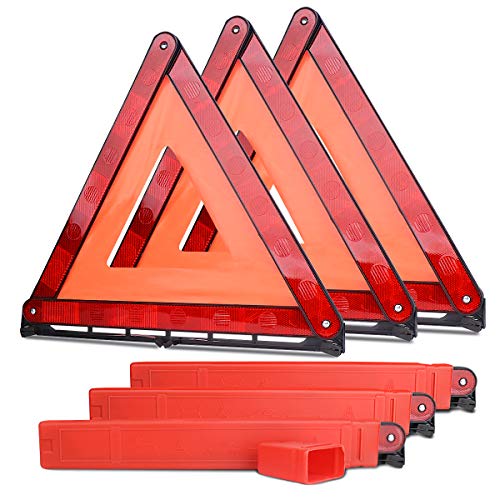
aikko Safety Triangle, 3 Pack Emergency Road Warning Reflector, Foldable
On paper, a three-piece set of foldable reflective triangles meant to be set out behind a stopped or disabled vehicle so approaching drivers see it sooner.
Check price on AmazonWho it is for
On paper this is a general-purpose emergency-kit item, and the broad case is every driver. A foldable three-pack is the kind of thing you buy once, put in the trunk, and hope you never open, the same way you treat a spare bulb or a set of jumper leads. It is aimed squarely at roadside breakdowns: a flat tire you are changing on a narrow shoulder, a car that stalls on an off-ramp, a stop you did not plan for on an unlit road. Drivers who cover a lot of miles, people who tow, and anyone who keeps an organized vehicle kit are the obvious fit, since the folded size makes it easy to carry without crowding out everything else. Truckers and commercial drivers are also a natural audience for the concept, with one important caveat covered below about certification. If you already carry flares or a beacon, a triangle set still complements them rather than replacing them, because it needs no battery and no flame to work.
Strengths on paper
Judged on the listing alone, the strengths are the ones that matter most for this category. The reflective-plus-fluorescent panel approach is designed to work across conditions, catching the eye in daylight through sheer color and bouncing headlight beams back at night, so the warning does not depend on the sun being up. The foldable build is a real practical advantage: gear that is awkward to store tends to get left at home, and a flat-folding set is far more likely to actually be in the car when you need it. Finally, shipping three in a box is the right idea for how triangles are meant to be used. One marker at the bumper warns a driver who is already close; three staged at increasing distance give traffic time to slow, change lanes, and plan around you. The three-pack format is what lets you follow placement guidance instead of improvising with a single triangle.
Things to check honestly
Because we are working from a listing and not from the roadside, these are the points to confirm for yourself rather than take on faith.
- Placement distance: set the triangles out at the distances your local rules or DOT guidance recommend, which vary by road type and speed. A triangle placed too close gives no warning time, and the right distance is the whole point of carrying three.
- Stability in wind: the listing describes weighted feet, but wind and the draft from passing trucks are the real test of any triangle base. It is worth standing them up and watching how they hold before you need them in an emergency.
- Certification for commercial use: if you drive commercially, your jurisdiction may require triangles that meet a specific certified standard. Reflectivity on a general consumer set may not match a certified DOT-compliant triangle, so confirm the legal requirement for your use before relying on this kit for work.
- Not a substitute for the basics: a triangle adds visibility, but it does not replace moving to a safe position, getting people away from traffic, and turning on your hazard lights. Treat it as one layer of a response, not the whole plan.
How it compares
It helps to see a reflective triangle set next to the other common roadside warning tools, because each solves the problem differently. Reflective triangles like this one are passive: they need no power and no flame, they work as long as there is ambient or headlight illumination, and they stay standing unattended while you deal with the vehicle. Road flares are active and burn bright enough to cut through fog and heavy rain, but they are consumable, raise a fire concern near fuel or dry grass, and are restricted or discouraged in some places. LED beacons and flashing triangles are also active, highly visible, and reusable, but they depend on batteries that can be dead exactly when you need them. The honest framing is that a reflective triangle set is the low-maintenance baseline: it is the thing that simply works whenever you open the case, which is why many drivers carry triangles as the default and keep flares or an LED beacon as a situational extra rather than the other way around.
Verdict
On the listing, the aikko Safety Triangle 3 Pack covers the fundamentals a roadside warning kit should: three reflective, fluorescent, foldable triangles with a weighted base and a case to keep them together. For a general driver building a trunk kit, that specification reads as a sensible, low-fuss choice, with the clear understanding that we are describing claimed features and not a verified roadside result. The points to settle for yourself are placement distance, how the feet hold in wind, and whether your use requires a certified standard. If the spec matches what you want from an emergency triangle set, you can look at the aikko safety triangles on Amazon and check the current details and reviews there before deciding.
Safety note
Place the triangles at the distances your local law recommends and set them out from a safe position, not while standing in live traffic. A warning triangle increases your visibility, but it does not guarantee safety. Your first priority is always to get yourself and your passengers away from moving traffic, turn on your hazard lights, and follow the official guidance for your road and region.
Disclosure: This is an editorial review based on the manufacturer's Amazon listing, not on hands-on use. We have not personally tested or used this product. As an Amazon Associate we may earn from qualifying purchases made through links on this page, at no extra cost to you.